Minnesota's youth deer hunting season is 7 years old. Do people like it?
Published in Outdoors
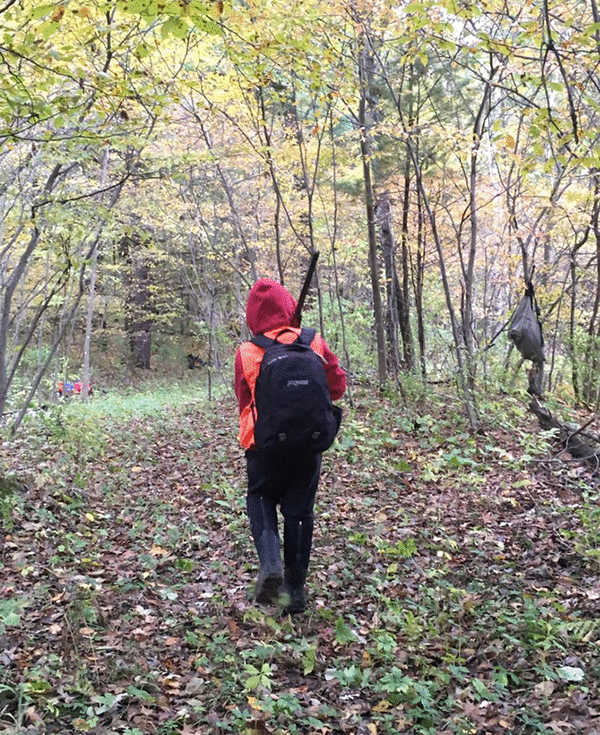
MINNEAPOLIS — For perhaps 20,000 Minnesota families, the question of what do with the kids for MEA weekend has an answer: Take them deer hunting.
Since 2019, the four-day weekend in October has coincided with a statewide deer hunting season for hunters ages 10-17. This year, those dates are Thursday, Oct. 15, through Sunday, Oct. 18.
It looks like it’s popular among the vast majority of the state’s 400,000 deer hunters.
According to the results of a Department of Natural Resources 2025 survey released this summer, 67% of deer hunters support the youth season, with 48% saying they “strongly support” it, and 80% agree that it helps recruit youth into deer hunting.
Support wasn’t a forgone conclusion. Some early hunting seasons are polarizing. For example, the state’s youth waterfowl hunt, held two weekends before the regular-season opener, is controversial because many hunters believe the early shooting scares ducks off those waters before adult hunters ever have a chance at them.
And there are some noteworthy misgivings about the youth deer season. The survey respondents were roughly evenly split over whether the youth season messes up the regular firearms season opener, which falls on Nov. 7 this year. More hunters (39%) believe the youth season reduces the number of bucks available for adult hunters during the regular season than disagree with that idea (31%), according to the survey, which questioned 6,000 deer hunters consisting of 1,200 from five geographic areas statewide.
The youth season has different requirements for licensing and whether a parent is present, depending on the age of the hunter. During the 2023 youth hunt, two adult mentors were accidentally shot by young hunters they were supervising in unrelated incidents. Neither shooting was fatal.
Last year, youth killed nearly 7,200 deer, evenly split between bucks and does. For context, the total harvest for all deer seasons was 186,000.
Chef Yia Vang shows how to break down a deer
On Wednesday, local chef and hunter Yia Vang will demonstrate how to break down parts of a deer at the Meat Eater store at 50th & France in Edina.
“For me, this is more than just learning how to break down a deer,” Vang, chef and owner of Vinai in Minneapolis, said in a social media post announcing the event. It’s about keeping traditions alive, sharing what we’ve learned from those who came before us, and bringing people together around food, hunting, and the land that continues to provide for us.”
Should Keystone Woods stay fully nontoxic?
The DNR is accepting public comments through Thursday on whether Keystone Woods Wildlife Management Area (WMA) should remain fully nontoxic.
The 1,800-acre WMA in Washington County opened two years ago with a ban on all lead ammunition. That was consistent with the longstanding requirements of the property’s owners before it entered state hands and opened to public hunting. The ban was enacted under emergency rules that will expire in November 2027; now the DNR is asking whether to make them permanent.
Nontoxic requirements aren’t new. Minnesota outlawed lead for waterfowl hunting in 1987, and a nationwide ban started in 1991. For years, many federal lands, including waterfowl production areas and national wildlife refuges, require nontoxic shotgun shot, so hunters of pheasants, turkeys, doves and other upland game have learned to adjust.
But a total ban — including single projectiles such as rifle rounds and shotgun slugs for deer — is far less common. The DNR has enacted such a ban for special youth deer hunts in state parks and for most Scientific and Natural Areas that allow hunting.
One surprise impact of the total ban: It effectively outlaws squirrel hunting with .22-caliber rifles.
The DNR is aware of the issue. “Small game hunters who rely on .22 caliber rimfire ammunition may be disproportionately affected due to the limited availability of nontoxic options,” an agency statement reads. “This group includes hunters from cultural groups with distinct hunting practices, such as Hmong and Karen communities.”
©2026 The Minnesota Star Tribune. Visit startribune.com. Distributed by Tribune Content Agency, LLC





Comments