Functional Fashion: When Utility Becomes Style
Published in Fashion Daily News
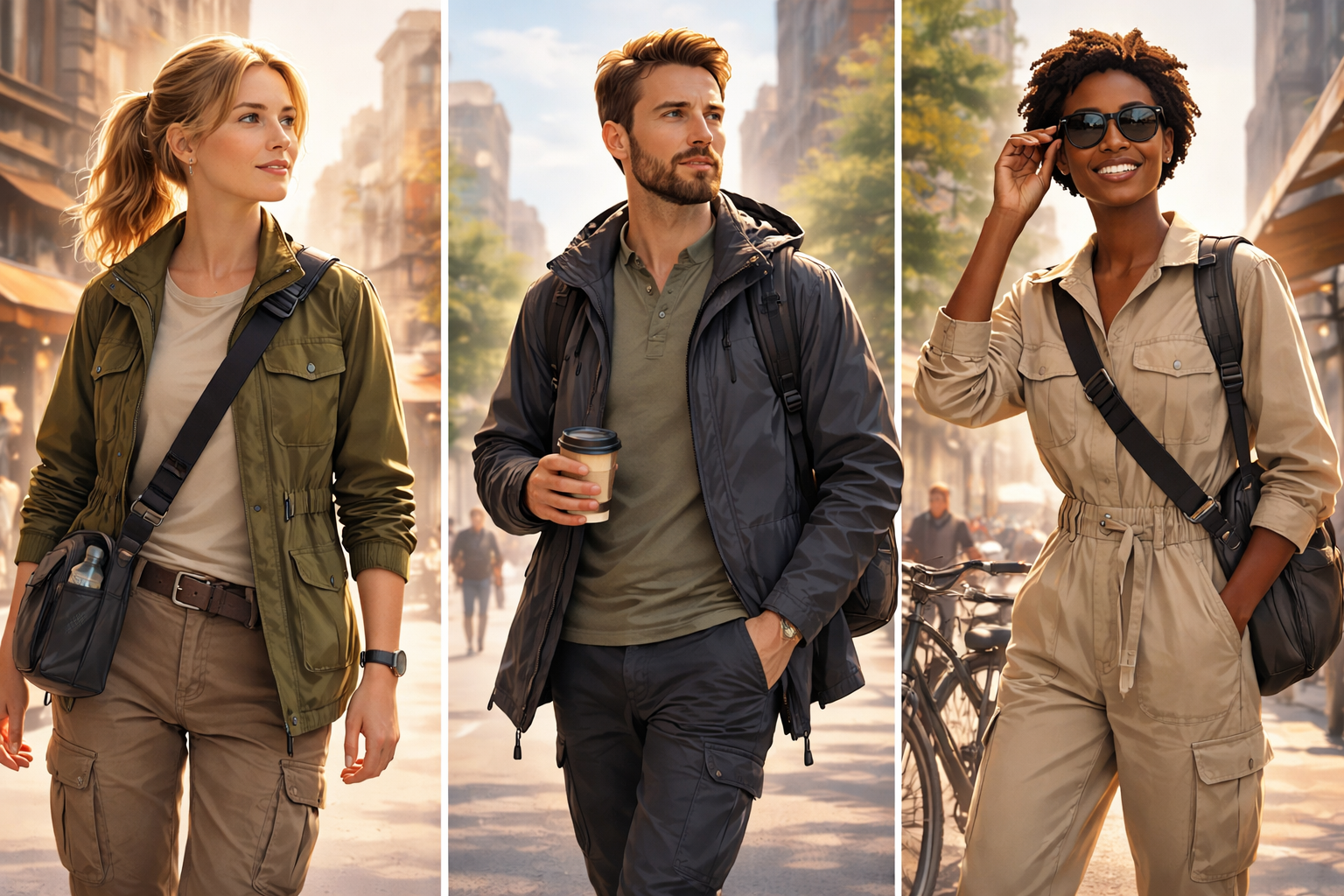
By the time a fashion trend reaches its third runway cycle and second influencer backlash, it often discovers a secret: it works better when it actually works. Functional fashion — clothing designed with practical purpose first — has steadily moved from the margins of workwear and athletic gear into mainstream style. What was once built for labor, travel, weather, or movement is now built for daily life, and increasingly, for visual identity.
The shift is not accidental. It reflects how people live now: mobile, multitasking, climate-aware, and less willing to suffer for aesthetics alone. From cargo silhouettes to performance fabrics to modular wardrobes, utility is no longer the opposite of style. In many cases, it is the style.
From Tool to Trend
Many of today’s most visible fashion staples began as strictly functional garments. Blue jeans were designed for miners. Parkas were engineered for Arctic survival. Field jackets and bomber jackets came from military aviation. Hiking boots, trail shoes, and technical fleeces were built for terrain, not cafés.
The pattern repeats across decades. Specialized gear enters civilian use because it solves real problems: durability, warmth, mobility, storage, weather resistance. Designers then refine the cut, adjust proportions, change materials, and recontextualize the look. Utility becomes aesthetic language.
Cargo pants are a clear example. Once dismissed as bulky and unfashionable, they returned through slimmer cuts, better drape, and higher-quality fabrics. The pocket — formerly a purely practical feature — became a visual design element. The message shifted from “prepared for work” to “prepared for anything.”
Performance Fabrics in Everyday Wear
One of the most important developments in functional fashion is invisible: fabric technology. Performance textiles — moisture-wicking knits, stretch blends, thermal regulators, and water-resistant weaves — have moved from sportswear into daily wardrobes.
Travelers, commuters, and hybrid workers increasingly choose garments that resist wrinkles, regulate temperature, and allow movement. Stretch denim, structured knits, and weather-treated outerwear now appear in offices and social settings without reading as athletic gear.
The appeal is straightforward. A blazer that stretches, a shirt that breathes, or trousers that repel light rain reduce friction in daily life. Comfort used to be treated as a compromise. Now it is treated as baseline engineering.
Pockets, Panels, and Purpose
Functional fashion often reveals itself through structure. Extra pockets, reinforced seams, adjustable closures, articulated knees, and layered panels signal that a garment is designed for use, not just appearance.
These details once suggested manual labor or outdoor activity. Today they suggest readiness and intention. A jacket with secure interior pockets speaks to urban commuting. A crossbody bag with modular compartments suggests mobility. Adjustable hems and cuffs suggest adaptability across environments.
Designers increasingly treat utility features as visual rhythm — repeating shapes, closures, and hardware as part of the garment’s identity. Zippers, straps, and fasteners are no longer hidden; they are highlighted.
The Influence of Travel and Urban Life
Modern fashion has been heavily shaped by travel behavior. Lightweight layers, packable garments, and versatile footwear reflect how frequently people move between climates and settings. A single outfit may need to function in transit, indoors, outdoors, and socially.
Urban environments add their own pressures. Walkability, public transit, bike commuting, and variable weather reward clothing that allows motion and adaptation. This has contributed to the popularity of technical sneakers, hybrid dress shoes, commuter jackets, and structured backpacks.
Functional fashion thrives where unpredictability exists. The more variables in a day, the more valuable adaptability becomes.
Workwear’s Long Echo
Workwear remains one of the strongest influences on functional style. Chore coats, canvas pants, overshirts, and heavy twill garments continue to cycle through fashion because they carry visual signals of reliability and endurance.
Even when produced in lighter or more refined materials, these garments retain their symbolic weight. Reinforced stitching, visible hardware, and structured silhouettes communicate durability — a quality many consumers value amid fast-fashion fatigue.
Brands across price ranges now produce “heritage-inspired” pieces that reference tool uniforms, workshop gear, and field clothing. The aesthetic suggests permanence in a culture saturated with disposability.
Minimalism Meets Utility
Functional fashion does not always mean complex garments. Minimalist wardrobes often rely heavily on utility principles: fewer items, higher quality, greater versatility. A capsule wardrobe — built around interchangeable, durable pieces — is a functional system disguised as a style philosophy.
Neutral color palettes, consistent fits, and layer-friendly silhouettes allow garments to serve multiple roles. The emphasis shifts from novelty to performance. Instead of asking, “Is this new?” the question becomes, “Will this work repeatedly?”
This approach reduces decision fatigue and increases wardrobe efficiency — practical benefits that double as aesthetic discipline.
Sustainability and Longevity
Utility and sustainability frequently overlap. Durable clothing lasts longer, reducing replacement cycles. Repairable garments — with replaceable soles, patchable fabrics, or modular components — support extended use.
Consumers increasingly recognize that longevity is both environmentally and economically practical. Functional garments often justify higher initial cost through longer lifespan and broader usability.
Brands have responded with repair programs, reinforced construction, and material transparency. The narrative of value is shifting from seasonal trend to lifecycle performance.
When Utility Becomes Identity
Functional fashion also communicates identity. Wearing garments associated with exploration, craft, or technical skill can express values — preparedness, resilience, independence.
This symbolic layer explains why utility aesthetics persist even when the wearer is not climbing mountains or building structures. The clothing suggests capability. It projects readiness rather than ornament.
In this way, functional fashion is not anti-style. It is style with a thesis: that usefulness is beautiful.
The Practical Future of Style
Fashion rarely abandons aesthetics, but it increasingly negotiates with reality. Climate variability, mobile work, and comfort expectations are reshaping design priorities. Garments that adapt, endure, and perform are likely to remain central rather than peripheral.
The runway may still celebrate spectacle, but the closet is voting for function.
Practicality, once treated as the dull cousin of style, has become its co-designer.
========
Marlowe Quince is a lifestyle and design writer who covers clothing, material culture, and everyday engineering. They focus on how practical objects become personal statements. This article was written, in part, utilizing AI tools.






Comments