Israelis vote in big numbers to decide Netanyahu's fate
Published in Political News
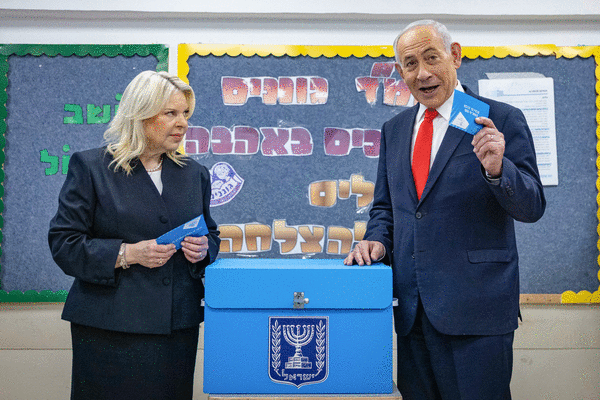
Israelis voted in their highest numbers for more than half a century in the country’s first election since the October 2023 Hamas attack, effectively a referendum on the war-dominated rule of Prime Minister Benjamin Netanyahu.
Turnout stood at 31.5% as of 12 p.m. on Tuesday, according to the central election committee, the highest level at this stage in the process since 1973 — a highly charged election that followed the Yom Kippur war with Egypt and Syria. Voting will stop at 10 p.m., when the first exit polls will be published.
Netanyahu, 77, is seeking reelection, saying the military campaigns he’s led in Gaza, Lebanon, Syria and against Iran over the past three years have made the country safer. He’s been endorsed by U.S. President Donald Trump, who backed him to help “finish the job” in the ongoing war against the Islamic Republic.
Netanyahu’s opponents, led by 66-year-old former armed forces chief Gadi Eisenkot, say Israel’s longest serving leader is also the country’s greatest threat — and the main reason for its growing international isolation. They point to his indictment for bribery — an allegation Netanyahu denies — and partnership with nationalist extremists such as Itamar Ben Gvir, who have influenced the government’s anti-Arab rhetoric and policies.
Polling stations in parts of Tel Aviv were packed on Tuesday morning, with lines snaking through schools — where many of the booths have been set up — and spilling into streets. Some of the political parties set up stands blaring out music, and handed out balloons, sweets and stickers to voters and their children.
Polls have consistently forecast that neither Netanyahu nor Eisenkot’s blocs will secure enough votes to claim the 61-seat parliamentary majority needed to form a government. Complex, weeks-long negotiations and even a possible second election could follow.
The Israeli Arab minority may end up as kingmakers, with turnout among the group that makes up about 20% of the population expected to be higher than previous elections. The two Israeli Arab parties — which accuse Netanyahu’s far-right government of racial discrimination and neglect — have offered to support a coalition led by Eisenkot. Some of his partners, however, have vowed they won’t serve in any government relying on Arabs.
Tens of thousands of Israeli expatriates have flown in to cast their votes, with many expected to be supporting the opposition.
The shekel appreciated about 1% against the dollar to 3.05 by around 2:30 p.m., its biggest one-day rise since August. Tel Aviv-based IBI Investment House last week said that Israeli assets would probably climb if Netanyahu lost.
“This is an emergency appeal, because they are trying to steal the election from us,” Netanyahu said in a statement released by his Likud party, referring to Israeli Arabs. “Turnout in the Arab sector in the south is inestimably higher than in the Jewish sector. You must go out and vote,” he said.
“Make sure everyone comes: grandpa, grandma, uncle and aunt, the neighbors,” Netanyahu added. “Nobody stays home. No beach, no barbecue. Go out and vote Likud.”
A higher turnout increases the number of votes that smaller parties need to enter parliament, said Shalom Yerushalmi, a veteran political analyst for The Times of Israel, potentially reducing the number of potential coalition partners for both sides.
“A high turnout generally plays into the hands of the larger parties; beyond that point, it all comes down to which side can better mobilize its voter base,” he said.
In Israel, unlike in the U.S., the war against Iran was broadly popular, in part because Tehran sponsors Islamist militant groups like Hamas and Hezbollah. What has hurt Netanyahu is that it’s turned into indefinite conflict with no end in sight and hasn’t dislodged the theocratic government in Tehran.
While Netanyahu says regime change is a priority, Eisenkot is advocating narrower goals. He says Iran’s nuclear program must be stopped, militarily if necessary. But he wants more focus on diplomacy and told Army Radio this month it is “not an achievable goal” to overthrow the Iranian government.
Beyond national security, voters are casting ballots on a set of domestic issues — including whether to draft ultra-Orthodox young men into the army. The power of the Supreme Court and judicial system, which Netanyahu has sought to undermine, transparency and corruption are also on the agenda.
The economy has mostly taken a back seat. Israel has proved resilient in the face of multiple wars, with the shekel and the stock market outperforming most rich-world peers this year. Still, whoever leads the next government will have to deal with issues ranging from a soaring defense budget to rising sovereign debt levels and one of the world’s highest costs of living.
Netanyahu loyalists remain defiant. While the prime minister has been criticized for failing to prevent the Oct. 7, 2023 Hamas attack — in which militants killed 1,200 people and abducted 250 — his supporters blame the security establishment and say only Netanyahu has the skill and experience to defend the nation. At least 74,000 people have been killed in Israel’s subsequent campaign in Gaza, according to the Hamas-led health ministry there, and the territory has been reduced to near rubble.
For Palestinians in Gaza and the occupied West Bank, where violence by Jewish settlers on Arabs has soared since the Hamas attack, the election is unlikely to lead to any immediate changes. Like Netanyahu, Eisenkot has ruled out a two-state solution, saying it would threaten Israel’s security, though he’s condemned the government for supporting Israelis who have attacked Palestinians.
Netanyahu’s Likud party says Israel has turned the tables on its Iran-backed enemies since 2023. Beyond controlling most of Gaza and largely stopping Hamas rocket fire into Israel, the military has severely degraded Hezbollah in southern Lebanon and, along with the U.S., damaged Iran’s nuclear and missile capabilities, even if Tehran’s leadership remains far from defeated.
The settler violence in the West Bank has shocked many people abroad and led to sanctions by European nations that count themselves as firm allies of Israel. Within the Israeli opposition, there is a call to crack down on the perpetrators and a sense that Netanyahu is reluctant to do that lest he angers the religious-nationalists in his coalition.
Still, in contrast to a couple of decades ago, few Israelis consider the settlements illegitimate and the vast majority are against a Palestinian state.
Eisenkot, who’s no dove and who lost a son in the war in Gaza, accuses Netanyahu of hysteria and fear mongering. Yair Golan, another former military leader who heads the left-leaning Democrats party, added: “On Tuesday we will replace the sowers of panic and return Israel to security and sanity.”
Eisenkot warned in a final campaign rally on Sunday that Netanyahu might not permit an orderly transition if he loses.
“I know Netanyahu — he will stop at nothing, no lie and no extreme measure, to remain in power,” said Eisenkot, who served briefly in a Netanyahu war Cabinet after the Oct. 7 attacks.
—With assistance from Shira Rubin.
©2026 Bloomberg L.P. Visit bloomberg.com. Distributed by Tribune Content Agency, LLC.









































Comments