Editorial: 2 things Trump must do to lower prices
Published in Political News
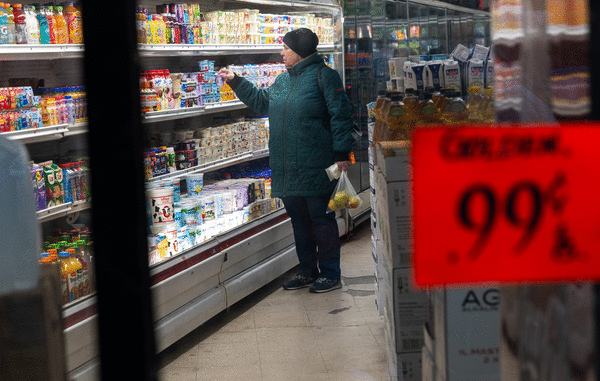
Current high prices for groceries, housing and other goods are largely not the fault of President Donald Trump. That blame still rests with the inflationary policies of former President Joe Biden, whose tenure brought a 21.5% rise in consumer prices.
Most of the Democrats who are now castigating Trump and Republicans for the continued stress high costs are causing Americans ignored warnings and supported those reckless Biden policies.
But they are right that Trump has not done nearly enough to bring down the cost of living and has instead stubbornly pursued priorities that keep prices high.
First, give credit where it is due. Trump has pushed expanded production of oil, coal and natural gas, which should steadily bring down energy costs. His administration has implemented selected tax cuts, including no tax on tips and reduced Social Security benefits taxes, that have increased take-home pay. He has negotiated pricing deals with some key industries, including pharmaceuticals, to lower the cost of prescription drugs and other products.
And his rollback of the crushing fuel economy standards imposed by Biden offers the hope of lower automobile sticker prices in the future.
Still, while inflation has fallen since its 40-year high in 2022, in Trump's first year the rate has remained at 3%, the same as when he took office. He has not yet delivered on the price relief he promised.
That's largely because of two poorly considered measures — tariffs and the immigration crackdown.
It's a sure bet that Trump will boast of the success of his broad tariff regime when he speaks today to the Detroit Economic Club. He credits the levies on foreign trade for bringing in $200 billion to the federal Treasury, money he's teased returning to Americans in the form of tariff rebate checks.
But that money, in large part, came out of their pockets in the first place. Trump's own Labor Department estimates the tariffs on construction materials will result in 450,000 fewer homes built in America in the next five years. That will worsen a housing shortage that is driving up home prices. The lack of affordable housing is one of the primary economic concerns of American families, and unless something changes, it will remain so when they go to the polls for this fall's mid-term election.
While Trump lifted tariffs on many imported food items, such as coffee, beef and tropical fruit, they remain on a wide swath of items from places like China and Canada.
Trump claims the tariffs are returning manufacturing jobs to the United States. One example is Stellantis' decision to shift $13 billion in expanded production to the U.S. from Canada. But on the whole, tariffs have not substantially revived the manufacturing sector.
To make tangible progress on the affordability crisis, Trump should rescind the 25% duty still in effect for most imported vehicles and many auto parts (outside of countries in the United States-Mexico-Canada Agreement).
He could also rescind or lower tariffs on imported steel, currently at 25%.
Tariffs are just one obstacle to lowering prices. Another major factor is Trump's aggressive round-up of undocumented immigrants. An estimated 40% to 50% of farm workers are in the country illegally.
The fear created by the administration's enforcement efforts left farmers without the workers they needed during last fall's harvest, and threatens to create labor shortages for the upcoming planting season.
Enforcing immigration law is essential, and a priority shared by the American public. But Trump should mitigate the impact on the agriculture industry by expanding the guest worker program and providing more visas for those willing to do field work.
Boasts have to be matched by results. So far, Trump has been bragging more than delivering on price relief.
©2026 www.detroitnews.com. Visit at detroitnews.com. Distributed by Tribune Content Agency, LLC.

















































Comments