Column: 'You Can See Everything' just made itself impossible for Oscar voters to ignore
Published in Entertainment News
The best-reviewed movie of the year runs nearly three hours, has launched a thousand memes and just enjoyed one of the biggest opening weekends of any documentary in film history.
And "You Can See Everything" is just getting started.
From the moment it had its world premiere last month at a Telluride Film Festival surprise screening, this boundary-breaking chronicle of Theranos founder Elizabeth Holmes' fall from grace became the year's buzziest movie. Fans started lining up outside Lincoln Center at 3 a.m. a couple of weeks ago for a chance to score standby tickets for the movie's New York Film Festival premiere. Celebrities packed a subsequent screening at the motion picture academy's museum in Los Angeles. Trent Reznor, Elizabeth Olsen, Steven Yeun and "Hacks" castmates Megan Stalter and Hannah Einbinder were among the attendees eager for an early look, though the two people drawing the most attention were the film's directors, Nathan Fielder and Lance Oppenheim.
"I still am not sure to this day like what I experienced, and it's one of the reasons I'm excited for it to come out and more people see it," Fielder told the audience at a Q&A following the L.A. screening. "It was just a small group for so long, and I actually think maybe it being out there, everyone can help me understand what I went through a little bit."
The movie leaves you with many questions — about Holmes, about the slippery nature of truth and about the objectivity of documentary filmmaking itself.
And, in the wake of its spectacular success (it grossed $15 million on 855 screens this weekend, the second best opening ever for a documentary), it gives rise to another question: Will "You Can See Everything" make Oscar history and become the first documentary nominated for the best picture?
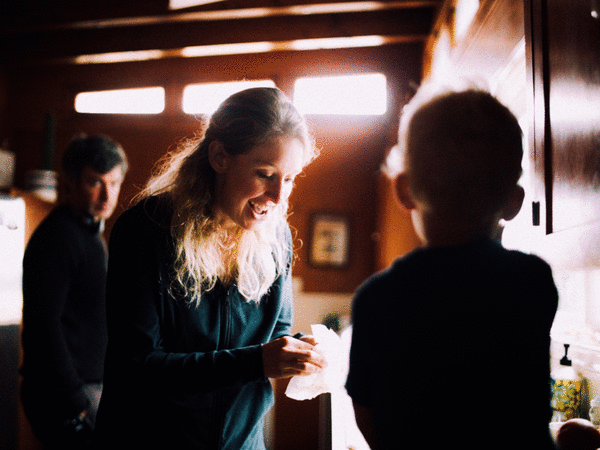
If the voting criteria is to reward the year's finest movies, the answer would be an unqualified yes. "You Can See Everything" is, in a way, two films. The first follows Holmes, her partner Billy Evans and their two young children in the 34 days before she starts an 11-year prison sentence for defrauding investors. Fielder and Oppenheim set up shop in the family's rented San Diego home, and two weeks before Holmes leaves, Fielder moves in.
Holmes says she wants to clear her name — "I know I didn't commit any crime," she tells Fielder — and hopes that the openness, the "radical transparency" as Evans puts it, will change the narrative surrounding her. Fielder doesn't believe her and is often troubled and astonished by what she says. That friction leads to some tense and funny and hugely uncomfortable moments, heightened by the pore-probing close-ups the film employs.
Once Holmes goes to prison, the deadpan Fielder, the creator of the absurdist, reality-blurring TV shows "Nathan for You" and "The Rehearsal," recruits a celebrated actor to help him make sense of the month he spent staring into Holmes' unblinking eyes. It's wild and startling and disorienting. Moderating a Q&A after the movie's Telluride premiere, Emma Stone called this section of the doc a "rom-com caper" and she's not far off.
If you don't follow the Oscars too closely, you'd probably figure that the movie's potent combination of commercial and critical acclaim will easily propel "You Can See Everything" to a nomination and an eventual victory in the documentary feature category.
And if this was any other branch, that would probably be true.
But given the documentary group's voting history, it's possible "You Can See Everything" won't even be nominated. Documentary branch voters, using a preferential voting system, annually produce a shortlist of 15 movies, announced in mid-December. Branch members must then watch all 15 shortlisted films to be eligible to vote on a second preferential ballot that produces the final five nominees.
In the past, the doc branch has ignored popular films ("Hoop Dreams"), movies featuring celebrities (the 2024 Will Ferrell trans identity road trip feature "Will & Harper"; Morgan Neville's well-loved 2018 look at Fred Rogers, "Won't You Be My Neighbor?") and docs that play with the form itself. (Errol Morris' celebrated 1988 true-crime investigation "The Thin Blue Line" won several awards, but failed to earn an Oscar nomination, likely because Morris employed reenactments.)
The branch is seen by some as an insular group ("strange" and "weird" are words that come up often when talking with academy members dumbfounded by its choices), and Fielder fashions himself as the consummate outsider, albeit one who is famous and a headliner in his own movie.
But if "You Can See Everything" doesn't make the feature documentary shortlist (which, let's be clear, would be shocking) or go on to earn an Oscar nomination (again, a torches-and-pitchforks scenario), it could still make history and nail down a best picture nomination. (It could pick up nods in both categories, an outcome looking likelier, what with 2,000 sold-out houses this weekend.)
One thing working against it: Documentaries have their own category at the Oscars. Voters' aversion to cross-category pollination has limited animated movies since the academy created the animated feature category in 2001. Since then, only "Up" (2009) and "Toy Story 3" (2010) have cracked the best picture field.
But Oscar voters have shown an increased willingness to break norms of late, making "Parasite" the first non-English-language film to win best picture in 2020, embracing horror (the nomination haul and wins for Ryan Coogler's "Sinners" and Amy Madigan's supporting actress Oscar for "Weapons" last year), lavishing indie auteur Sean Baker with four Oscars for "Anora" and routinely giving at least one of its best picture slots to an international movie.
Onstage after the Los Angeles screening of "You Can See Everything" earlier this month, Fielder mused about Holmes' left-field invitation to make a movie.
"Why you would want to spend your last month of freedom in a decade with this guy," Fielder wondered. "Like, why? Even with no cameras ... I like to see myself as a nice person overall, but still, I wouldn't choose me."
Maybe not. But he's going to have a lot of people on his side the next couple of months as awards season swings into gear.
©2026 Los Angeles Times. Visit at latimes.com. Distributed by Tribune Content Agency, LLC.









Comments