Trump administration denies $112M in Medicaid payments to Minnesota
Published in News & Features
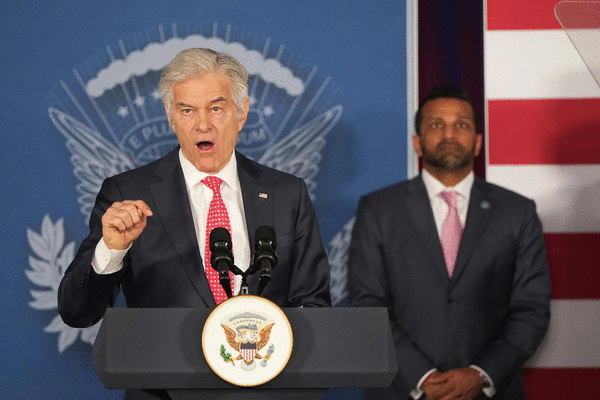
President Donald Trump’s administration has taken steps to deny more than $112 million in Medicaid money from Minnesota after delaying reimbursements on more than half a billion in payments so far this year, state officials said this week.
The disallowance for July through September could mean Minnesota will have to find a way to pay for programs deemed a high risk for fraud — like those that support home care assistance providers and assistance for children with autism.
Those programs have seen significant levels of fraud. Federal prosecutors speculate Minnesota Medicaid fraud in 14 high-risk programs since 2018 could run into hundreds of millions, if not billions, and have charged dozens in connection to allegations.
The state already shut down one of those programs altogether in October 2025 and ordered third-party audits. As part of demands for further “corrective action,” Centers for Medicare and Medicaid Services administrator Mehmet Oz started deferring payments to Minnesota earlier this year.
State officials considering options
State officials warned last month that they might have to start “clawing back” payments from Medicaid providers if they lost federal funding, though they didn’t explain what that would look like.
As of Wednesday, the state Department of Human Services said it would be “considering its options before determining next steps.” Minnesota officials can still ask the federal government to reconsider its decision.
“While we have been bracing for some sort of disallowance, this amount is deeply concerning for the more than one million Minnesotans who depend on Medicaid and stands to perpetuate uncertainty across our state’s health and human services system,” John Connolly, temporary Human Services commissioner, said in a letter to agency staff.
The $112 million disallowance is attached to a larger $259 million funding freeze to the high-risk state programs that Oz and Vice President JD Vance announced in February.
Attorney General Keith Ellison sued to challenge that action, describing it as a Republican administration’s political retribution against a state run by Democrats. A federal judge declined Ellison’s request for a restraining order to block the deferral in April, but said he believed the state might have a good argument. The matter is still pending in federal court.
At the end of April came another $91 million in deferrals as federal agents raided child care businesses suspected of fraud. Another $200 million came in July. There remains another $350 million that CMS has withheld from Minnesota.
Those freezes could also turn into disallowances, wrote Connolly, who added that he was concerned about further funding freezes on top of the $550 million from this year so far — despite what he described as the state’s cooperation.
“We remain concerned about the transparency and fairness of the process CMS is using to deny reimbursements for claims the state has already paid,” he wrote.
Deferrals becoming withholdings
Officials with Minnesota’s Department of Human Services insists they have taken corrective actions like reviewing providers, freezing enrollments in high-risk programs, and providing weekly updates on anti-fraud efforts. But federal officials still haven’t released funding, and now their deferrals are becoming actual withholdings.
The state ended the fraud-ridden Housing Stabilization Services program, started weekly data sharing with federal officials and revalidated more than 5,000 high-risk providers in a process that involved a significant expansion of announced on-site visits.
That revalidation resulted in the disenrollment of more than half of its high-risk providers, though most of it was due to incomplete paperwork and did not determine there was fraud, Connolly said. More than 2,000 of the disenrolled providers later had payments restored amid outcry over what providers called a “rushed and poorly managed” process.
The Department of Human Services also called into question how Medicaid officials arrived at $112 million in disallowed payments — a figure they said was 1,000 times greater than the amount of 78 disallowed claims they found after reviewing 330 from a pool of 6 million claims over three months.
Federal withholding could affect Minnesota’s fiscal outlook as lawmakers create the state’s next two-year budget during the upcoming legislative session. The state could need to find a way to compensate for hundreds of millions in cuts as potential shortfalls loom later this decade.
Minnesota fraud has been described as “industrial scale” by former Assistant U.S. Attorney Joe Thompson, who speculated total losses in Medicaid programs alone could top $9 billion since 2018 — a figure Gov. Tim Walz and state officials have disputed. So far, prosecutors have proven hundreds of millions of dollars in fraud.
In a report published earlier this year, Walz’s director of program integrity, Tim O’Malley, blamed fraud problems on a culture in state agencies “more based on compassion than compliance.”
________
©2026 MediaNews Group, Inc. Visit at twincities.com. Distributed by Tribune Content Agency, LLC.





Comments