Europe braces for more protests as cost-of-living anger grows
Published in News & Features
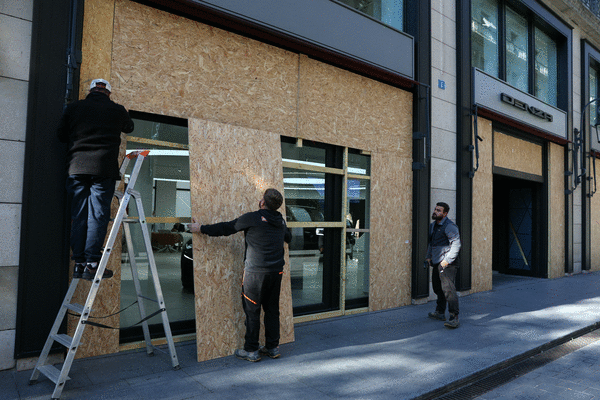
Thousands of people are expected to take to the streets in France, Germany and Italy on Friday and Saturday to protest high living costs, as frustration with governments expands across Europe.
Police are also on alert in Spain for possible protests in central Madrid following a high-speed rail crash that killed 69 people on Wednesday.
The weekend will bring “a very high risk of public disorder, which will begin with protests during the day and continue well into the evening,” French Interior Minister Laurent Nuñez said at a press conference on Thursday. Some far-left groups are calling for gatherings to begin at 8 p.m. in many cities, he added, “with particularly violent messages calling for insurrection.”
Halloween, which falls on Saturday, could create cover for groups wanting to instigate violence, other officials cautioned.
Demonstrations have exploded across Europe in recent weeks, from Belgium and Portugal in the west to Serbia and Albania in the east. They are youth driven, and although grievances are slightly different in each country, the prevailing sentiment is one of anger over affordability, crumbling infrastructure and inequality.
France will deploy 70,000 police officers this weekend, similar to the force used during last week’s demonstrations, Nuñez said. The French Police Prefecture said on X that anyone masking themselves in a public space or carrying a fake weapon could be fined. Some commentators replied citing a 2010 law that says people can cover their faces in certain circumstances, including celebrations.
French authorities last weekend banned some demonstrations and deployed a significant police presence to prevent the rioting and looting that broke out in some places after marches on Oct. 17. Although these measures largely succeeded, protesters said their right to expression had been stifled.
The French protests began as a student movement, with high schoolers closing down their schools as they demanded smaller class sizes, building renovations and a revision of the university selection system.
French President Emmanuel Macron said he was hoping high schools would reopen on Monday, after the government proposed loans for infrastructure upgrades and changes to the university process by 2028. Establishments are currently closed for the holidays.
The Yellow Vests, a group demanding greater socioeconomic equality during months of protests that started at the end of 2018, is among those planning to show up on Saturday. As a prelude, it is calling for people to make noise with pots and pans on Friday night outside the National Assembly, France’s legislative body.
France’s government, which is trying to get a 2027 budget through a divided lower house of parliament, wants to quell the protests without spending more. Borrowing costs have risen as bond investors worry about the country’s ability to rein in the public deficit with an upcoming presidential election.
Spending cuts in the budget will be at the heart of another day of demonstrations and strikes planned on Nov. 5 by the France’s biggest unions.
In Germany, a group calling itself “Gen Z Regelt” emerged on social media platforms earlier this month, saying “the French showed us first, so we’ll follow.” It is organizing demonstrations in 32 cities on Saturday, and said it won’t tolerate any form of violence against groups or property.
German authorities on Thursday said they have so far seen no evidence anyone planning to foment unrest will infiltrate the marches, while warning “the far-left extremist scene” and groups associated with foreign-related extremism may be mobilizing.
Dozens of demonstrations are also planned in Italy on Friday, where left-wing unions have called for a general strike to protest against the rising cost of living, stagnant salaries and defense spending increases. They are also demanding better workers’ rights.
Schools, hospitals, national and local transport may be affected. Deputy Premier Matteo Salvini, also the transport minister, issued an injunction ordering transport unions to postpone the strike, but the unions have defied the directive.
Though strikes are relatively frequent in Italy, Prime Minister Giorgia Meloni has approved stringent security measures after a series of protests turned violent earlier this month. More broadly, Meloni has embraced a tougher stance on law and order since far-right nationalist Roberto Vannacci, a former general, founded his own National Future party this year.
In her budget this week, Meloni targeted some proposals to woo middle class and younger voters ahead of a general election next year, including low taxes on salary bonuses and measures aimed at increasing the stock of affordable housing available for rent. The opposition and trade unions, however, have said they aren’t enough.
—With assistance from Benoit Berthelot and Daniel Basteiro.
©2026 Bloomberg L.P. Visit bloomberg.com. Distributed by Tribune Content Agency, LLC.





Comments