Trump says meeting with Zelenskyy, Putin will be set up soon
Published in News & Features
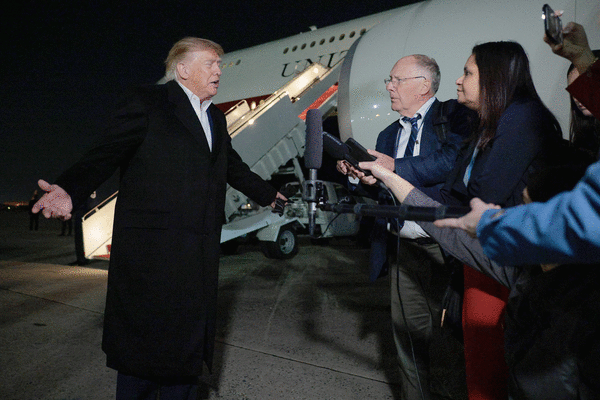
President Donald Trump said a meeting would soon be arranged involving Russian President Vladimir Putin and Ukrainian President Volodymyr Zelenskyy in an effort to end the war between their countries, now in its fifth year.
“I think with Russia, we’re making a lot of progress with Russia-Ukraine,” Trump told reporters early Wednesday after returning from Texas, where he held two midterm election campaign rallies. “There’ll be a meeting set up here soon,” he added, “with President Putin and President Zelenskyy.”
“I would say it’ll happen in the over the next not too long,” he said when asked when such a summit might take place. He also said “it could be done not necessarily through a meeting.” The president did not provide further details.
Secretary of State Marco Rubio and special envoy Steve Witkoff joined Trump on his trip to Texas, and he said that they discussed both Russia and the Iran war.
Trump also said he was meeting with President Xi Jinping of China “on nuclear disarmament” and that “certainly, Russia would fit into it.”
Trump promised as a presidential candidate in 2024 that he could solve Russia’s war on Ukraine within 24 hours if he were elected. The battlefield remains deadlocked and negotiations since Trump’s return to office have been unsuccessful.
The Kremlin has said that Putin’s only prepared to meet with Zelenskyy once there’s a peace agreement that’s ready to be signed. It repeated that position on Tuesday after Putin held phone talks with Norwegian Prime Minister Jonas Gahr Støre and Finnish President Alexander Stubb, Kremlin foreign policy aide Yuri Ushakov told local media.
Zelenskyy should come to Moscow if he wants to have direct discussions with Putin, Ushakov added.
In June, the Ukrainian president challenged Putin to hold direct peace talks, suggesting Switzerland, Turkey and Arab countries as potential venues, in a rare open letter addressed to the Russian leader. Putin rejected the appeal, saying he saw “no sense” in a meeting, and urged Russia’s military to “keep working.”
In recent weeks Trump has expressed frustration with Zelenskyy, blaming him for contributing to higher U.S. energy prices through attacks on Russian energy infrastructure. But the Iran war, which began in late February, is considered a bigger factor in the high cost of gasoline and diesel fuel.
Rising prices of fuel, healthcare and housing have led many Americans to accuse the president of breaking another promise — to lower prices.
Those voter anxieties have put Trump’s Republican Party on the defensive in next week’s elections.
—With assistance from Chelsea Mes and Tony Halpin.
©2026 Bloomberg L.P. Visit bloomberg.com. Distributed by Tribune Content Agency, LLC.





Comments