Putin releases hostage to US, earning praise as a 'humanitarian'
Published in News & Features
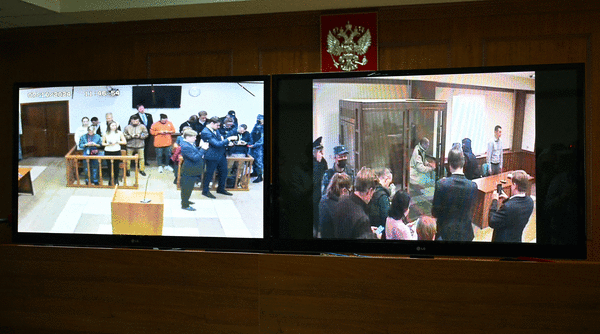
The Trump administration praised Russian President Vladimir Putin as a “humanitarian” for releasing a detained U.S. citizen, the latest White House move to curry favor with Russia in its efforts to end the war in Ukraine.
The release also came with a new willingness by Putin to resume trilateral negotiations with the United States and Ukraine to end the war, now in its fifth year.
The extraordinary comment came from President Donald Trump’s special envoy for the Ukraine war, Steve Witkoff, who complimented Putin in Russia as he secured the release of Stephen Hubbard, 74, an American teacher captured in 2022 and convicted in 2024 of fighting for Ukraine.
“You talk so much about my president, President Trump, being a humanitarian,” Witkoff told Putin. “You are a humanitarian also, sir, and I salute that. I commend you.”
The compliment, which flies in the face of decades of U.S. policy, brought strong denunciations from two Republican senators.
While the president said the U.S. had not been required to give anything in return, Trump noted that the release wouldn’t have happened without his decision to waive sanctions imposed by a U.S. law that passed the Senate 86-11 and that Trump himself supported.
“If sanctions would have been placed, certainly those negotiations would have come to a complete and total halt,” Trump wrote in a social media post.
With the release of Hubbard, Russia also indicated it was ready “in principle” to resume trilateral talks with the U.S. and Ukraine about ending the war, Kremlin aide Yuri Ushakov said, according to Russian news agency Interfax.
Putin made the offer during more than three hours of talks in St. Petersburg with Witkoff, Ushakov told reporters in an audio briefing. Russia’s prepared to have such three-way talks during a period in the first ten days of November, he said, without specifying the level of officials involved.
Officials from the three countries have held sporadic talks throughout the war and the issues that need to be resolved in any peace deal, particularly on territory and security guarantees for Ukraine, are fairly clear to all sides. There’s no sign so far that Putin is ready to sit down with Ukrainian President Volodymyr Zelenskyy for direct negotiations.
Witkoff arrived in Russia from Oslo, where he held talks on Tuesday with Zelenskyy. The U.S. envoy told Putin at the start of their talks that he’d brought documents setting out proposals for a potential resolution of the war following the “productive” discussions in Norway.
Ushakov appeared dismissive of those ideas in his briefing, however. While Putin noted “some new elements” in the approaches of Kyiv and the Europeans outlined by Witkoff, “they contained relatively little that was useful in the context of settling the Ukraine crisis,” Ushakov said.
United States' Warming Ties With Russia
Witkoff’s remarks and Trump’s decisions to ease Russia’s economic isolation were the latest example of the White House pursuing policies that critics say benefit the Kremlin more than Ukraine, traditional NATO allies in Europe and even the U.S. It also follows Trump’s controversial agreement to allow Russia to begin exporting diesel — a policy that Trump claimed will lower energy prices ahead of U.S. midterms on Nov. 3, but which few analysts think will make any meaningful difference.
In recent weeks, Trump has also said that Zelenskyy should step aside, blamed him for prolonging the war and said Russia “was doing fine” in Ukraine.
Zelenskyy has displayed his irritation with the U.S., accused it of delaying crucial Patriot air defense interceptors and throttling SpaceX’s Starlink and Starshield services, which allow Ukraine to intercept Russian missiles and help them deliver food and supplies to troops on the front line.
The administration has denied doing so.
Administration officials have defended their Russia policy as part of efforts to end the war in Ukraine, and have argued that shunning Putin or pressuring Russia would derail U.S. efforts. Trump has also argued that allowing Russia to export energy products, making billions of dollars in revenue, will drive down global oil prices in the hopes of staving off Republican losses in the Nov. 3 midterm elections.
The White House used the prisoner release Wednesday to push for a new round of technical talks between Russia, the U.S. and Ukraine on ending the war, according to a U.S. official.
But Ukrainian and European officials, as well as many foreign policy experts, have long argued the war will only end by increasing economic pressure on Moscow and demonstrating to the Kremlin that Ukraine’s allies will back it indefinitely.
Still, Witkoff’s calling Putin — who has arrested political opponents, arrested Americans and is responsible for the deaths of tens of thousands of Ukrainian civilians — a “humanitarian,” sparked immediate pushback.
GOP Sen. John Cornyn of Texas reposted Russia Today footage of Witkoff making the remarks with the comment: “No. Putin is a stone cold killer.”
“WTF, Steve? Look up the definition of ‘humanitarian.’ What an embarrassing and outrageous thing to say,” Republican Sen. Thom Tillis of North Carolina wrote on social media. “You should go back to Ukraine and ask the families of the children Putin has kidnapped and murdered whether they agree your friend Putin is a ‘humanitarian.’”
Neither senator faces reelection and were already out of Trump’s good graces.
Vice President JD Vance defended Witkoff on Wednesday. “I agree with Steve Witkoff saying something nice to a person who just released an American hostage,” Vance said. “We should all be celebrating that, not be complaining about what Steve Witkoff said in order to get it done.”
_____
(With assistance from Jennifer A. Dlouhy and Daryna Krasnolutska.)
©2026 Bloomberg L.P. Visit bloomberg.com. Distributed by Tribune Content Agency, LLC.





Comments