Late-night buses cut in Miami-Dade's new $14 billiion budget. A fare hike may save them
Published in News & Features


MIAMI — Bus riders face cuts in late-night service and the county’s elected sheriff fell short on the extra dollars she wanted to hire more deputies as Miami-Dade commissioners narrowly passed a $14.3 billion budget for 2027 in the early morning hours Friday.
The final spending plan smoothed over some of the contentious edges of the spending plan Mayor Daniella Levine Cava first proposed in July — one with transit cuts, limited dollars for environmental preservation and far less growth in law enforcement funding than what Sheriff Rosie Cordero-Stutz requested.
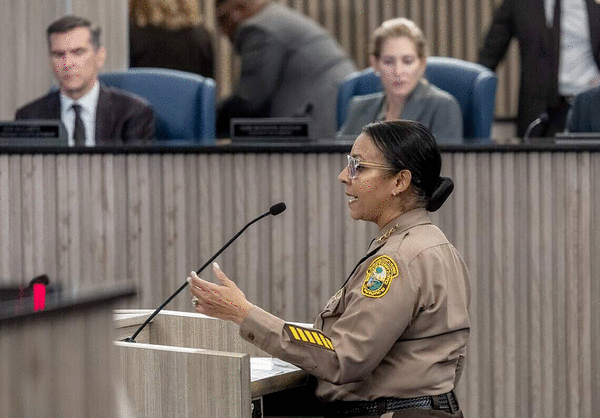
Commissioners approved nearly $1 billion in tax funding for the Miami-Dade Sheriff’s Office, including a last-minute boost of $11 million in surplus county money. But they declined to approve the additional $45 million Cordero-Stutz said would be required for her to put more deputies on the road and fully staff her independent agency.
“Without the requested dollars, there will be no additional hiring,” she said. “Zero.”
The final budget vote at 4:22 a.m. Friday may not end the funding stand-off between Levine Cava, a Democrat, and Cordero-Stutz, a Republican. Florida law allows sheriffs to appeal county funding decisions to the Florida Cabinet, a panel headed by the state’s Republican governor, Ron DeSantis. Should the Cabinet overrule the commission, Miami-Dade would need to pull dollars from elsewhere in the budget to cover the added funding.
Commissioners said they supported more dollars for the Sheriff’s Office but also couldn’t back cuts elsewhere in the county budget to fully fund Cordero-Stutz’s request.
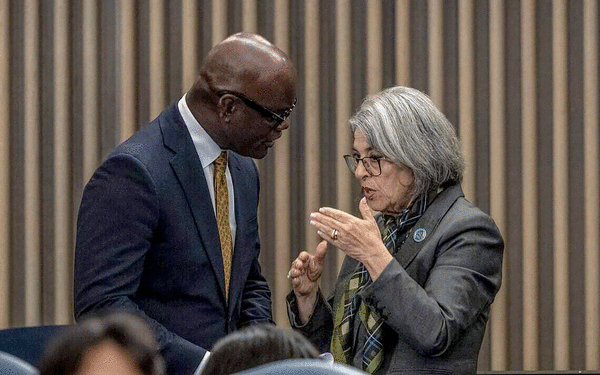
“We’re the body that balances what you say you need versus the needs of the rest of the county,” Commissioner Oliver Gilbert told Cordero-Stutz during the meeting.
Around 2 a.m., the marathon budget debate took a detour into the realm of video games when a top aide to Levine Cava walked commissioners through some of the details of a pending marketing deal with the makers of Grand Theft Auto. The company wants to pay Miami-Dade for real-life promotions of a new version of the Vice City version of the game, which unfolds in a fictional version of Miami.
RockStar Games agreed to pay nearly $1 million to put “Welcome to Vice City” on the roof of the county-owned Kaseya Center, where the Miami Heat play, and Levine Cava wants that to go to the long-stalled Parcel B park planned behind the area.
But Commissioner Juan Carlos Bermudez said he wants that money — and planned promotions at Miami International Airport and other county properties — to go to the Sheriff’s Office, given the video game’s depiction of violence against police and crime-heavy narratives. Commissioners agreed to take up that issue at a future meeting.
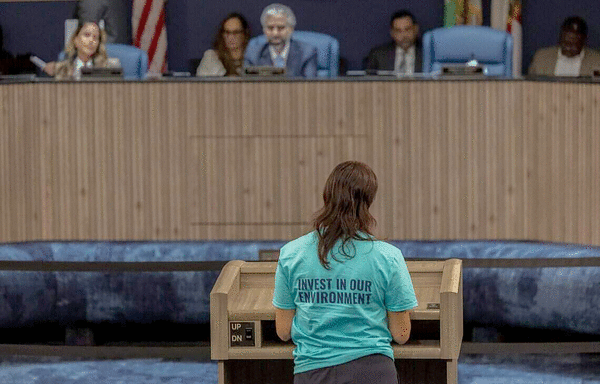
During the roughly four hours of public comment, two topics got the most attention: transit cuts and declining funding for the county’s preservation program for wetlands and other sensitive areas. Known as the Environmentally Endangered Lands program, or EEL, it receives about $8 million in the Levine Cava budget, but advocates said $20 million is needed to keep the program afloat.
“I was born and raised here in Miami,” Sarah Gonzalez, 25, told commissioners. “I’ve seen how our green spaces have dwindled over time.”
Commissioners later agreed to spend $12 million in environmental clean-up reserves to match the funding requests from advocates.
Transit advocates, however, fell short on their push for extra dollars.
When she unveiled her budget proposal in July, Levine Cava asked commissioners to cut early-morning and late-night bus hours on dozens of routes to save about $31 million from the transit budget. Faced with pushback from transit advocates and bus passengers, the mayor this week said she’d found money to restore the morning routes. That left late-night riders facing service cuts in the spring.
Daniel Chomin-Virden, 34, said he took the 77 bus to attend Thursday’s budget hearing, and he used his one-minute at the microphone to urge commissioners to keep buses running earlier and later for people who depend on them.
“The people of Miami-Dade County need to know the bus will be there in the morning and at night when we need them to get home,” he said.
María Claudia Schubert-Fontes, 28, told commissioners that after she attended the first budget hearing on Sept. 3, she would have had to pay Uber $52 for a late-night ride if transit wasn’t an option. “Luckily I was able to take the 11 Bus home,” she said.
While Levine Cava’s reductions on late-night routes survived intact in the budget, commissioners agreed to take up the issue again this fall before the cuts took effect this spring. That could include a 25-cent or 50-cent increase in Miami-Dade’s $2.25 transit fare, which has been flat for 13 years. Levine Cava said she’d bring back a plan that would match higher rates with restoring late-night hours and possibly reviving a portion of the dozen bus routes set for cancellation this spring.
Faced with slowing growth in property taxes, state cuts in sales taxes and rising payroll costs from union labor agreements, Levine Cava proposed scattered cuts and one-time revenue patches. That included eliminating 400 vacant positions, tapping an $89 million rail-project reserve to cover transit expenses and using an affordable-housing reserve to pay for a county eviction-reduction program.
Even so, tax funding of the budget was up 4%. That will leave significant cuts to come if Florida voters approve a state cut in property taxes; the county estimates the Amendment 3 proposal will force a 20% reduction in property-tax revenue by 2029.
Commissioners approved flat property-tax rates. The average homeowner should still expect slight increases in their county tax bills due a state rule that links taxable values to the inflation rate. For a house assessed at the county average of $270,000 last year, this year’s county tax bill would increase $58 to $2,165, according to a Miami Herald calculation based on a home that pays county taxes for municipal, fire and library services.
Passing Miami-Dade’s budget requires eight pieces of legislation, and the closest vote came on the ordinance establishing a 6% increase in the county’s water rates. That ordinance passed on a 7-6 vote, with Commissioners René Garcia, Roberto Gonzalez, Keon Hardemon, Natalie Milian Orbis and Raquel Regalado joining Chair Anthony Rodriguez in voting against it.
©2026 Miami Herald. Visit at miamiherald.com. Distributed by Tribune Content Agency, LLC.





Comments