Stanford Daily First Amendment suit against Trump administration moves toward final ruling
Published in News & Features
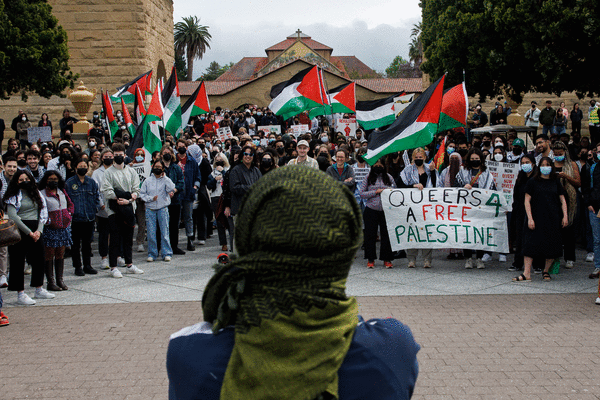
SAN JOSE, Calif. — A federal judge in San Jose could hear final arguments as soon as May 6 in a major First Amendment lawsuit pitting the Stanford Daily student newspaper against the Trump administration over visa policies that plaintiffs say have silenced noncitizen journalists and students critical of Israel and U.S. foreign policy.
Both sides filed a joint scheduling proposal last week asking the judge to approve the timeline, which would skip a full trial and let the judge decide based on existing written records, including evidence and testimony from a related federal case.
Under the proposed schedule, each side would file additional written arguments addressing any new evidence or legal developments by April 9, and responses to the other side’s briefs by April 23. The May 6 hearing would then serve as a bench trial “on the papers,” with lawyers presenting oral arguments before the judge.
The lawsuit, filed in August 2025, accuses Secretary of State Marco Rubio and former Homeland Security Secretary Kristi Noem of using provisions of the Immigration and Nationality Act to revoke visas based on constitutionally protected speech. At least 55 student newsrooms also expressed support for the case in briefs filed last October.
The plaintiffs — the Stanford Daily and two anonymous international students — are asking the court to declare two of those provisions unconstitutional: the deportation tool and visa revocation authority Rubio has used to target noncitizens for protected speech. They also want injunctions blocking the administration from enforcing those provisions going forward.
While Stanford Daily’s lawyers framed the challenge around their specific plaintiffs, Judge Noel Wise ruled when she denied the government’s motion to dismiss that the case requires the court to determine whether the two provisions are unconstitutional not just as applied to the plaintiffs, but “facially, meaning in all situations.” Those provisions give the Secretary of State authority to cancel visas at any time and to deport noncitizens whose speech is deemed a foreign policy threat.
“First Amendment protections are crucial for protecting people in the United States from government overreach and for ensuring that individuals participate in the public debate through political expression,” Wise wrote in her January order. “Freedom of speech is fundamental to our democracy and is at the heart of the case.”
The government argued the two anonymous plaintiffs had never been personally targeted and therefore had no basis to sue, noting that a state department review of 5,000 leads on campus protesters resulted in visa revocations in less than 1% of cases. The government also argued the court should limit any ruling to the specific plaintiffs rather than weigh whether the laws are unconstitutional in all situations, and that visa revocations are largely immune from court challenges under federal law.
While not yet ruling on the merits, Wise rejected those arguments, finding all three plaintiffs had demonstrated they belonged in the case based on their “credible, well-founded fear of immigration action against themselves” and noncitizen Stanford Daily members who engage in pro-Palestinian expression.
Although Noem was recently fired by Trump, lead counsel Conor Fitzpatrick said last week her removal does not affect the case — the lawsuit targets “the head of DHS rather than Noem personally.”
As part of the stipulation agreement, parties have agreed to incorporate trial testimony and exhibits from American Association of University Professors (AAUP) v. Rubio, in which a federal judge ruled in late 2025 that the First Amendment protects lawfully present noncitizens from deportation based on their political views.
But the Stanford Daily case goes further.
While AAUP challenged how the administration was enforcing its deportation policy, the Stanford Daily suit goes after specific provisions in federal law that give the government that power — and adds a press freedom angle the AAUP case did not raise. Plaintiffs argue the chilling effect goes beyond individual self-censorship, pointing to editors who quit the paper entirely and reporters who pulled their own published stories out of fear of deportation.
While any decision from the District Court would be subject to appeal, the case could potentially strip the government of the legal authority to use immigration enforcement as a tool for political censorship.
Fitzpatrick said a favorable ruling would demonstrate “that the First Amendment prohibits the government from revoking someone’s visa or rendering them deportable simply because the government doesn’t like their opinions.”
“It’s about who we are as a country and about whether we actually believe in the freedom of speech enshrined in our Constitution,” he added.
Stanford has become a flashpoint for disputes over pro-Palestinian expression and allegations of antisemitism on campus. That tension also figures in a separate high-profile case in which defendants facing felony vandalism charges — who argued they were engaged in protected political speech — are set for retrial later this month.
©2026 MediaNews Group, Inc. Visit at mercurynews.com. Distributed by Tribune Content Agency, LLC.



Comments