'Moscow has girls': Inside Epstein's network from Palm Beach to the Kremlin
Published in News & Features
In his quest to build out an elite global network and satisfy his insatiable desire to procure women and girls to sexually abuse, Jeffrey Epstein often turned to Russia and its neighboring countries.
He built relationships with leading political and business figures from the region, including a top Russian diplomat, a Russian deputy minister and businessmen who built their fortunes in post-Soviet Eurasia, according to millions of pages of records related to the disgraced financier released recently by the U.S. Justice Department. The records don’t show that any of the business people from the region that Epstein tried to cozy up to engaged in any of the financier’s illicit activities.
At the same time, he lured women and girls from Eastern Europe and Central Asia into his trafficking network. He thought little of his victims beyond sexual objects to be traded across borders, once characterizing them as the “best export” of those countries.
“Saudi has oil,” Epstein wrote. “Moscow has girls.”
In 2010, he offered Britain’s former Prince Andrew a dinner date with a woman who was “26, (R)ussian, clevere (sic.) beautiful, trustworthy.” Three years later, Epstein introduced New York Giants co-owner Steve Tisch to a Ukrainian woman who was a “little freaked by the age difference” between her and then-65-year-old Tisch. That same year Epstein was forwarded an email from a Belarusian modeling agency with an attached video of a teen in a bikini.
“Arrives in March. 18yo (sic.),” reads the missive to Epstein.
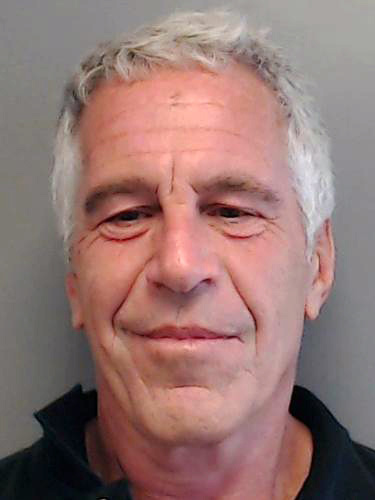
Jeffrey Epstein, seen in an undated photo released by the late-financier’s estate to the House Oversight Committee and made public on Dec. 18, 2025. House Oversight Committee
Most of the women Epstein sought were aspiring models. Many, the records show, were looking for a way out of tough personal circumstances or an escape from home countries with limited opportunities.
Epstein flattered them and gave them advice to build trust. He paid for their travel, funded their educations, sent their families gifts and in some cases helped them move to the United States or countries in the European Union. Their immigrant status meant they were dependent on him for finances, visas and housing.
In exchange, he demanded sexual favors.
In some instances, the records show, Epstein’s payments to his victims’ accounts in banks in Russia raised red flags in compliance departments of Western banks. Some of those Russian banks are now under U.S. and European Union sanctions.
Epstein’s myriad relationships with figures who have a history of being in proximity to the Kremlin have fueled speculation that he was part of Russia’s intelligence apparatus. There is nothing in the released documents that suggests that was the case. The Kremlin has also steadfastly denied it.
Friends in high places
Epstein appears to have developed a relationship with Vitaly Churkin, Russia’s ambassador at the United Nations from 2006 until his death in 2017.
He was likely introduced to Churkin by Norwegian diplomat and politician, Terje Rød-Larsen, in 2015, the records show.
Epstein and Churkin rarely exchanged messages but the files suggest that they met quite a few times. In December 2016, Epstein a l so received an unspecified gift from the ambassador.
“[M]y house in palm beach is always available for you as your rest spot,” Epstein wrote in a text message to Churkin the next year.
Epstein also took an interest in Churkin’s son, Maxim, gifting him laptops and Apple watches, the records show. Epstein mentored the young man who was looking to get into finance and introduced him to billionaire hedge fund manager Glenn Dubin and former head of Hyatt Hotels, Tom Pritzker. He asked Churkin to keep his relationship with Maxim a secret.
New York hedge fund manager Ari Glass gave an internship to Maxim at Boothbay Fund Management on Epstein’s recommendation.
The records also indicate that Epstein loaned Maxim at least $25,000, it isn’t clear what the funds were for.
Maxim Churkin was most recently employed at Russia’s Sberbank — now under U.S. sanctions — until December 2025, according to his LinkedIn account. He could not be reached for comment.
Boothbay Fund Management declined to comment.
Epstein also wanted to personally meet with Putin, and tried to enlist the help of Thorbjørn Jagland, the former Norwegian Prime Minister, in making the connection. Epstein wanted to discuss Russia’s economy and finances with the country’s president, the records show.
In 2013, Epstein claimed to former Israeli prime minister Ehud Barak that he had denied Putin’s request to meet on the sidelines of an economic conference in St. Petersburg.
“If he wants to meet, he will have to set aside real time and privacy,” he wrote.
Epstein was a known fabulist and there is nothing in the records to suggest he met with Putin. There is also no way to verify whether the Russian president ever made any overture to meet him.
‘New horizons’
The year after Epstein’s claimed rebuff of Putin, he struck up a friendship with Sergei Belyakov, then the deputy minister for economic development of Russia.
“I do not know many people like you, who can open new horizons and prospects,” Belyakov wrote in an email to him after the pair first met.
In 2015, Belyakov invited Epstein to participate at the St. Petersburg International Economic Forum — Moscow’s answer to the economic and business summit at Davos.
Belyakov also asked if Epstein could get filmmaker Woody Allen to do a session on cinema at the summit.
Epstein wrote to Allen’s partner, Soon-Yi Previn, about the invite but it’s not clear whether the filmmaker participated.
Six months later, Epstein wrote to Belyakov asking for a favor. He needed suggestions on how to deal with a woman from Moscow who Epstein claimed was blackmailing a group of New York businessmen — reportedly Leon Black and his associates.
Belyakov, a former graduate of the Russian intelligence academy, responded a few days later with what he had found out: That the woman was an escort who frequently flew to the U.S. to do her work but had no powerful patrons backing her.
Belyakov suggested that Epstein try to block her U.S. visa, though there’s no indication how Epstein would have achieved that or what he did next.
Belyakov in turn asked Epstein for advice on how to attract investors to Russia in the summer of 2016. At the time he was an adviser to the country’s sovereign wealth fund headed by Kirill Dmitriev who is now a key figure in Ukraine ceasefire talks.
Dmitriev and the fund were both sanctioned by the U.S. in 2022.
Epstein offered to help Belyakov edit their presentation to American businessmen.
“You should always have a good English speaking editor before anything is sent to (A)mericans,” he wrote. “There are pretty women who could fill that role.”
Odd payments to Russia
The files also reveal Epstein’s extensive efforts to procure girls from the post-Soviet countries.
He spent thousands of dollars buying plane tickets for the women from Eastern Europe and Central Asia. Their names are redacted but the records show scores of flights to Paris, New York and Miami to and from the region. Epstein also sent them luxury products as gifts and at times even paid for things like medical expenses.
Compliance officers at Deutsche Bank scrutinized multiple payments Epstein sent to accounts in Russian financial institutions like Alfa-Bank and Sberbank for potential sanctions violations, the records show.
“I know these are relatively small amounts, but it seems odd that Mr. Epstein would be sending payments to various individuals in Russia,” wrote a compliance officer.
The payments were eventually cleared after the bank determined that the account holders were not on any sanctions list.
A telling example of Epstein’s victims from the region was a young woman from Uzbekistan.
She was roughly 19 when she was first acquainted with Epstein around 2011, her correspondence with him suggests. She was an aspiring model but her family, like much of her native country, was seemingly conservative and was forcing her to get married. She was depressed and ran away from home.
Over the years, Epstein sent her money and even paid for her to get a dental procedure done. He also introduced her to Jean-Luc Brunel, a French modeling scout and Epstein’s accomplice. Brunel “loved” her and found her “very cute.”
Epstein arranged for her travel and paid for her to stay in Paris where the pair appear to have spent at least one night together. The records also show her sending him sexually explicit messages and photos. Epstein had the manager of his Paris property buy her a camera for that purpose.
In message after message she expressed her gratefulness and devotion to Epstein, who never reciprocated.
“It is marvellous and a great adventure,” she wrote to Epstein in late-2014 after receiving a visa to France, where Epstein had enrolled her in a language course.
The woman’s current whereabouts are unknown.
The girl who kissed Putin
Epstein’s business interests and sexual proclivities converged in the relationship he developed with Maria Bucher, who at the time of their introduction went by her maiden name, Drokova.
Hailing from a small town in Central Russia, Bucher joined Nashi, a youth political movement with close ties to the Kremlin, when she was 15-years-old. She rose through the ranks and became one of the group’s spokespersons — and famously kissed Putin on the cheek at a pro-Kremlin youth forum in 2009.
In 2011, Bucher moved to the United States and re-invented herself, working on public relations with venture capital firms and portraying her earlier activism as the result of the political environment she had grown up in. She was the subject of a Sundance documentary — Putin’s Kiss — that portrays her as Kremlin youth icon turned aspiring Western liberal who came to publicly disavow the Russian president.
Bucher appears in more than a thousand email exchanges with Epstein, from their introduction in 2017 to days before his arrest in 2019.
Epstein initially brought Bucher on as a publicist to manage his attempts at cleaning up his reputation after having to register as a sex offender, the released records show.
Bucher did not respond to the Herald’s questions about her relationship with Epstein. She has stated previously that Epstein did not pay her for any work and that she regretted not doing her research before helping him.
The records show Bucher brokering introductions for Epstein with journalists and figures from the tech and business worlds.
For instance, she introduced Epstein to Serguei Beloussov or Serg Bell, a Russian-born entrepreneur who was Bucher’s bridge to the tech world.
Epstein spoke with Bell on the phone at least once in January 2018, discussing quantum computing, among other topics, according to the released records.
Bucher and Bell’s ventures would later attract the attention of Western intelligence agencies, which probed whether they were involved in a covert effort to help the Kremlin develop cutting-edge technology, according to the Washington Post.
Both Bucher and Bell refuted the allegations at the time and denied any links to the Kremlin. Bell did not respond to the Herald’s questions.
The U.S. banned one of the companies Bell had co-founded from doing business with the intelligence community and ordered the removal of all of its equipment from U.S. intelligence agencies last fall. No reason was specified. At the time the company said Bell no longer had control over the firm.
Bucher also introduced Epstein to Varvara Corcos (at the time going by her maiden name Russkova), a partner at venture capital firm GVA Capital. A San Francisco Standard investigation found that GVA Capital was a vehicle used by one of Putin’s closest allies, oligarch Suleyman Kerimov, to invest millions of dollars in the Bay Area in 2015 and 2016.
Kerimov was sanctioned by the U.S. Treasury Department around six months after Epstein met with Varvara Corcos in the fall of 2017. Last year, the agency announced that it had fined GVA Capital $215 million in penalties for violating sanctions-related rules.
The Herald sent questions to the contact details listed on GVA’s public website, which bounced back. The Herald could not immediately reach Corcos.
Bucher at the time was also building up her venture capital firm, Day One Ventures, and often sought advice from Epstein, the records show.
“I would never create my fund without the ideas and knowledge you shared with me,” she wrote in a 2019 text message to him.
Bucher sometimes asked Epstein if he could help her find “right investors” for her ventures — in her words, “Russians with Western mentality.”
“Do you know any adequate oligarchs?” she asked in a September 2017 email.
Epstein suggested Len Blavatnik.
Blavatnik, a Ukraine-born billionaire who holds American and British citizenship, built his fortune in the aluminum industry in Eastern Europe after the Soviet Union collapsed.
It is not clear from the records whether Bucher ever met Blavatnik on Epstein’s suggestion or whether Blavatnik and Epstein knew each other.
The Herald sent questions to Blavatnik’s business and family foundation but did not receive a response.
The records show Epstein also sought to push his relationship with Bucher beyond business.
He secured appointments for her at the glamorous New York salon owned by his associate, celebrity hairstylist Frédéric Fekkai, and paid for her stay at the Four Seasons Resort in Palm Beach.
Bucher and Epstein often spoke over Skype and Bucher lavished praise on him, calling him “one of the brightest modern philosophers and thinkers,” the records show.
“I love your intellect, sense of humor and charisma but even more I love your big heart, kindness and your sincere care of your friends,” she wrote.
In one of their final communications recorded in the files, Epstein steered the discussion in an explicitly sexual direction.
Bucher shared several photos with Epstein from a shoot she said a friend had conducted in Paris.
He offered the same assessment in response to numerous photos.
“(Y)ou should never try so hard. (M)ore natural,” he wrote.
Then he had one final question.
“Nudes?”
“Next time I’m in Paris!” Bucher responded.
Epstein was arrested 11 days later on sex trafficking charges. He was found dead in federal custody a month after.
©2026 Miami Herald. Visit at miamiherald.com. Distributed by Tribune Content Agency, LLC.



Comments