How Jeffrey Epstein sought to infiltrate the justice system
Published in News & Features
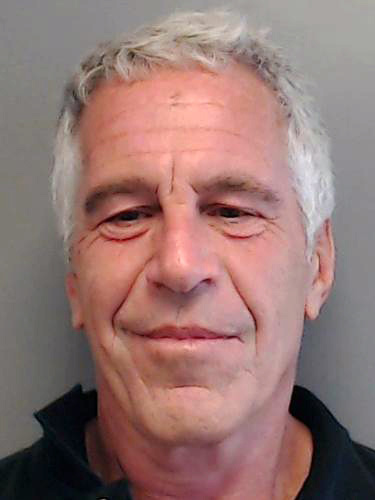
Jeffrey Epstein didn’t beat the justice system by accident.
For decades, the New York financier curated a network of influential people — politicians, business titans, media figures and academics — whom he leveraged to build his fortune and restore his reputation after he had been accused of preying on underage girls in South Florida in 2008.
While much of the spotlight has been on the elite heavyweights who hitched themselves to Epstein’s orbit even after he was jailed in South Florida, there’s been little scrutiny on how Epstein cozied up to some of the very people who were supposed to hold him accountable.
New documents — made public for the first time — show in greater detail how Epstein tried, and often succeeded, in influencing almost every level of the criminal justice system that threatened to disrupt his sex trafficking and money laundering empire.
Epstein’s efforts to corrupt the justice system is important because, had some of these figures rigorously investigated and monitored Epstein, he may not have been able to continue to sexually abuse women and girls for another decade.
This story is based on a Miami Herald review of thousands of documents released by the Justice Department, court records and interviews with key people involved in the Epstein case.
The documents — released in response to the Epstein Files Transparency Act passed by Congress last year — reveal how Epstein wooed state and federal prosecutors, assistant district attorneys, sheriff’s deputies, probation officers, federal marshals and customs and border patrol officers.
He even enlisted his court-approved sex-addiction doctor, Stephen Alexander, as a back channel to relay messages to government and law enforcement officials he wanted to secretly curry favor with.
Records show he tried to cultivate relationships with a coterie of former prosecutors, including: Alex Acosta, the U.S. Attorney in South Florida who approved Epstein’s plea deal; Jeff Sloman, Acosta’s former deputy in the South Florida U.S. attorney’s office; Matthew Menchel, the South Florida U.S. attorney’s former chief criminal prosecutor; Bruce Reinhart, a former South Florida federal prosecutor; Barry Krischer, the former Palm Beach state attorney; and Michael Gauger, who was the chief deputy of the Palm Beach County sheriff’s office during Epstein’s incarceration. Not all of his efforts were successful.
Epstein finalized an unusual deal in 2008 from federal prosecutors in South Florida that gave him federal immunity for serious sex trafficking charges in exchange for pleading guilty to lesser prostitution charges in state court.
He served 13 months in the Palm Beach County jail, followed by a year of house arrest. He was also directed to register as a sex offender under a federal statute that required him to report his whereabouts at regular check-ins in all the states he lived in, including the territory of the U.S. Virgin Islands, where he owned a palatial island home off the coast of St. Thomas.
But Epstein pulled a page out of his networking playbook to try to ease those restrictions too.
New emails show how he and his lawyers attempted to water down or eliminate his sex offender restrictions in New York by coaching assistant district attorneys under then-Manhattan District Attorney Cyrus Vance; and by using political loyalists and his sex addiction doctor to try to also reduce his requirements in Florida by appealing to former Gov. Charlie Crist.
The Justice Department was well aware of Epstein’s attempts to compromise the legal system. At least two federal probes were conducted, one in 2011 into whether Epstein unduly influenced federal prosecutors involved in his Florida criminal case; and another in 2020, into allegations that officers from the U.S. Customs and Border Protection turned a blind eye to the young female passengers Epstein flew into the St. Thomas airport on his private plane.
Neither of those probes resulted in criminal charges.
In 2018, after the Miami Herald published an investigation into Epstein’s crimes, the Justice Department’s Office of Professional Responsibility (OPR) opened another investigation at the behest of Congress into possible improprieties involving Florida prosecutors.
Despite evidence that one of the Miami prosecutors, Reinhart, had started to lay the groundwork for working for Epstein, OPR concluded that there was no evidence of prosecutorial misconduct with any of the South Florida prosecutors.
Reinhart, in a sworn statement, denied he was privy to any inside information on Epstein’s criminal case, but federal prosecutors, in court documents, contradicted that statement.
The OPR also declined to investigate whether Menchel, a former Miami prosecutor who had helped negotiate Epstein’s sweetheart deal, had subsequently engaged in a social and business association with Epstein.
Acosta attempts
By the time Epstein’s probation was over in 2010, Epstein was facing intense new scrutiny, as dozens of underage girls began filing federal civil lawsuits against him, including one that challenged the legality of his deal and threatened to put him in prison.
It was under that cloud that Epstein tried to arrange a meeting in February 2011 with the man who approved his federal deal: former U.S. Attorney Alex Acosta.
Acosta, who signed off on Epstein’s non-prosecution agreement, had left government by 2011, and was working as the law school dean at Florida International University. Now a member of the board of directors at Newsmax, a conservative-leaning news network, Acosta was also nominated by President Donald Trump in 2017 as labor secretary. He resigned in 2019 after Epstein was arrested on new sex trafficking charges in New York.
It’s not clear why Epstein wanted to meet with Acosta, but in an email, Epstein turned to another former Miami federal prosecutor, Menchel, the onetime chief of Acosta’s criminal division, in advance of the hoped-for meeting.
“I am going to have lunch with Acosta on Monday,” Epstein wrote to Menchel on Feb. 22, 2011. “Can we speak before, I can see you Sunday, if you have time and inclination.”
Menchel, who left the U.S. Attorney’s Office in August 2007 and was then in private practice with the international law firm Kobre & Kim, agreed to speak to Epstein by phone.
“Why don’t we say 9 a.m.?” Menchel replied.
Epstein also mentioned in an email to his lawyer, Martin Weinberg, that Alan Dershowitz, one of his defense attorneys who helped negotiate the deal, would also attend .
“I had scheduled a Dershowitz Epstein Acosta lunch on Mon.. I m thinkg th[sic] optics might be a problem as it is a public restaurant? thoughts?”
Both Acosta’s lawyer and Dershowitz said the meeting didn’t happen.
“Mr. Acosta did not meet, speak, text, call, or have any communication whatsoever with Mr. Epstein,” said Acosta’s attorney, Jeffrey A. Neiman. “To claim otherwise is an outright, bald-faced lie. Mr. Epstein, through his lawyer, did ask for a meeting with Mr. Acosta at some point in 2011. That meeting was never scheduled and never happened.”
From federal prosecutor to Epstein neighbor
During the federal criminal investigation into Epstein in South Florida, the lead prosecutor, Marie Villafana, consulted with another federal prosecutor in the U.S. Attorney’s small Palm Beach satellite office. Prosecutor Bruce Reinhart was not on the case, but Villafana, in a statement found in the Epstein files, said she did discuss with him the legal strategies involving Epstein’s female assistants, who were co-conspirators in his crimes, records show.
Shortly after confiding in Reinhart, he told Villafana that he was “best friends” with one of Epstein’s defense attorneys, Jack Goldberger, the files show.
Then in October 2007, while still employed by the U.S. attorney’s office, Reinhart registered his own private practice at 250 S. Australian Avenue, Suite 1400, in West Palm Beach. That address is also the same address and suite as Goldberger. And it was also the same address for the Florida Science Foundation, a non-profit that Epstein would use as a front for obtaining work release during his incarceration at the Palm Beach County jail. Instead of spending his time behind bars, Epstein was approved for “work release,” which allowed him to spend 12 hours a day, seven days a week in the Science Foundation offices.
Epstein hired Palm Beach sheriff’s deputies for private security details at the Foundation offices. Court records would show that despite being guarded by the deputies, Epstein smuggled in young women and was able to have sex with them in his office while he was still technically incarcerated.
Records contained in the DOJ’s Epstein files also showed that Epstein wired millions of dollars in cash from the Science Foundation to bank accounts while he was on work release.
Epstein’s use of wire transfers to move millions of dollars in cash has been the subject of inquiry for years. Oregon Sen. Ron Wyden, a Democrat, has called for investigations into whether Epstein’s banks facilitated his sex trafficking by turning a blind eye to suspicious financial transactions.
In 2013, two lawyers representing Epstein’s victims, Brad Edwards and Paul Cassell, filed a series of court briefs alleging that the Justice Department knew, and had evidence that Reinhart and Menchel had “business and/or social relationships” with Epstein.
Reinhart, who is now a federal magistrate, has denied he knew about or had any inside information about the Epstein case.
Edwards and Cassell’s complaint was sent to the U.S. Attorney’s office in Puerto Rico, which declined to pursue. Billing statements show that Reinhart was paid more than $20,000 from Epstein for representing Epstein’s employees.
Newly released emails show that Epstein also used Reinhart for other legal matters, including to help modify the terms of his non-prosecution agreement well after Epstein was already serving his sentence.
“Sorry to be a pain, lunch date...” Epstein wrote Reinhart on April 28, 2009 — while he was incarcerated and on work release. “I have a 60-day window under the [non-prosecution agreement]. I would like it to fall while I am in [jail] that only leaves 20 days from now to try to finalize a modification to probation.”
Emails show that Reinhart often complained to Epstein’s lawyer, Darren Indyke, about how slow Epstein was to pay his legal bills.
“I have not heard back from you, Darren, or anyone in the JE organization about my outstanding invoices. Attached are invoices through March 30, as well as a client ledger showing every invoice and payment for Mr. Epstein and [redacted]...the current amounts owed are $10,886.88 for [redacted] and $11,347 for Mr. Epstein. I don’t know why it is a struggle every time I try to get paid for what I do.”
Reinhart declined to comment for this story.
‘The possibility of working together’
Menchel, the former chief of the criminal division in Miami, left the Miami U.S. Attorney’s Office in August 2007, one month before Epstein’s non-prosecution deal was completed and was not involved in the final negotiations. Still, documents show that while Menchel had insisted on a minimum two-year sentence and a felony conviction, he also proposed one of the key provisions of the plea deal — that it was to be done in state court in Palm Beach County — instead of in federal court.
This later proved to be ideal for Epstein because it gave control of Epstein’s incarceration and probation to the Palm Beach state attorney and the Palm Beach sheriff’s office. Despite promising federal prosecutors that Epstein would be held behind bars for the length of his jail term, Epstein was given work release, files show.
Menchel later formed a promising business and social relationship with Epstein that began right after Epstein finished his sentence in Palm Beach.
“Jeffrey, I very much enjoyed our talk the other night. I look forward to the possibility of working together, but regardless, let’s keep in touch. Best, Matt,” Menchel wrote in October 2010, three months after Epstein finished his sentence.
A review of more than 100 emails exchanged between Menchel and Epstein over a seven-year period, from 2010 until 2017, showed they met frequently, sometimes at Epstein’s mansion in New York, or at various locations in South Florida.
The messages reveal a friendly banter, as Menchel sometimes confided private details of his family, and Epstein invited Menchel to dinners “with interesting people.”
Menchel’s lawyer, Erica Wolffe, pointed out that at the time, Menchel had left the U.S. attorney’s office, and was in private practice at a “premier law firm that was regularly sought out by individuals and businesses seeking representation in complex civil cases.”
In the written statement, she added: “Mr. Menchel’s communications were in the context of potential representation and referrals, none of which ever materialized into any business for Mr. Menchel or his firm. Public documents also demonstrate that Mr. Epstein sought out various other prestigious law firms for legal advice and representation. There was nothing inappropriate about any of Mr. Menchel’s communications or conduct.”
But the emails reveal that Menchel sometimes initiated the contact, reaching out to Epstein when Menchel traveled to New York for legal business. They met often for breakfasts, lunches and dinners. Epstein’s calendars show that when Menchel came to dinner the chef was not to serve sushi, noting that Menchel was allergic to shellfish.
The Epstein files also reveal that Menchel and Epstein were mindful of the potential for a conflict in their relationship. By 2012, Epstein had been accused of molesting and assaulting girls in 23 different civil lawsuits.
In 2013, Menchel told Epstein that he couldn’t represent him in a matter involving victims in South Florida who were still trying to get the Justice Department to prosecute him. Epstein asked Menchel for his advice on his dilemma.
“As you know, I’ve always stayed out of your matter with the US Attorney’s Office based on my involvement with your case,” Menchel wrote in an email.
Menchel discussed the potential for a conflict of interest with Epstein on Nov. 6, 2014:
“I have no issues as well since neither you nor I have done anything wrong when it comes to how we got to know one another. On the contrary, we never even spoke or met until I was years out of the government and I intentionally waited being introduced to you by Lilly until your sentence was fully served to avoid even the appearance of impropriety.”
Menchel was referring to Lilly Ann Sanchez, who represented Epstein in his South Florida criminal case. Both Menchel and Sanchez had previously worked together in the U.S. attorney’s office. Menchel had also dated Sanchez, according to the 2020 OPR investigation. That report noted Menchel failed to tell his supervisors that he had had a personal relationship with a member of Epstein’s defense team.
Furthermore, records show that Sanchez was the defense attorney whom Menchel discussed the state plea with in 2007.
“I told Lily [sic] that a state plea with jail time and sex offender status may satisfy the USA,” Menchel wrote to Villafana, in July 2007.
Villafana, upon learning he had discussed a plea bargain behind her back, was furious. She had spent months building the criminal case — taking victims’ statements, gathering corroborating evidence, issuing grand jury subpoenas and helping to arrange travel for FBI agents who had found evidence that Epstein was also trafficking girls in New York, New Mexico and the U.S. Virgin Islands.
Villafana had drafted an 82-page prosecution memo directed to Acosta, Sloman and Menchel supporting a proposed 60-count indictment. Weeks later, the Justice Department division in Washington that combats child exploitation reviewed her materials, offered to work with her and called the memo “exhaustive” and “well done.”
While Villafana ultimately participated in negotiations with Epstein’s team, she felt that Menchel’s plea discussion at that stage showed Epstein and his attorneys that prosecutors didn’t think they had the evidence to take the case to trial.
“[I]t is inappropriate for you to enter into plea negotiations without consulting with me or the investigative agencies, and it is more inappropriate to make a plea offer that you know is completely unacceptable to the FBI, ICE [Immigration and Customs Enforcement], the victims and me,” she wrote, in a July 2007 email contained in the files.
Menchel responded in a tone that Villafana would later characterize as an effort to “intimidate” her.
“If the U.S. Attorney [Acosta] or the First Assistant [Sloman] desire to meet with you, they will let you know. Nor will I direct Epstein’s lawyers to communicate only with you,” wrote Menchel. “If you want to work major cases in the district you must understand and accept the fact that there is a chain of command — something you disregard with great regularity.”
Trying to leverage the Menchel relationship
Over the years, Epstein asked Menchel to represent him in a number of legal matters, and referred other potential clients to him, including JP Morgan banker Jes Staley, emails show. (Court documents reveal that in recent years, Staley also faced accusations of sexual assault in civil lawsuits. He has denied any wrongdoing.)
Epstein also considered hiring Menchel to represent him in a lawsuit he talked about filing against Virginia Giuffre, an Epstein victim who in 2011 had made allegations against him, the former Prince Andrew and a number of other Epstein associates. The Herald could find no record that the lawsuit ever materialized.
And Epstein also tried — and failed —to leverage his relationship with Menchel to meet Sloman, who succeeded Acosta as U.S. Attorney in South Florida in May 2009, and then left the U.S. Attorney’s office and went into private practice in June 2010.
In July 2011, Epstein wrote to Menchel, when he ran into Sloman’s wife in Aspen. “I assume her friend was Sloman’s wife. Is he in Aspen? I would love to meet him.”
Menchel replied: “Yes, that was Sloman’s wife, but she came out to visit us alone. Jeff [Sloman] is in Miami. Maybe next time you are in Florida we can all get together.”
In another email on Mar. 2, 2012, Epstein mentions an upcoming meeting with Menchel and writes “Sloman for dessert?”
Sloman told the Herald that he never met with Epstein and was surprised when Menchel even suggested it.
Sloman did meet with Dershowitz for a “relaxed drink” in 2009 when Epstein was trying to ease the restrictions imposed on Epstein during his house arrest. “It was so nice having a relaxed drink and conversation on the porch of our neighborhood bistro,” Dershowitz wrote in an email. Emails show that that meeting was to discuss the terms of Epstein’s home detention.
“I especially appreciate your assurance that the feds will not interfere with how the Palm Beach sheriff administers jefferey’s sentence as long as he is treated like any similarly situated inmate,” Dershowitz wrote to Sloman, misspelling Epstein’s name. He added, “My understanding is that if the sheriff were to decide, in the normal course of events, that the circumstances warranted Jeffrey completing the custodial portion of his sentence under alternative custody/in-home detention, your office would not intrude.”
Sex addiction therapist serves as back-channel
During the time Epstein was incarcerated in 2008-2009 — as well as his subsequent house arrest, he found a back channel to communicate with the Palm Beach Sheriff’s Office, which supervised his detention. Under the terms of Epstein’s state plea and sex offender status, he was ordered to undergo treatment with a psychologist for his sex addiction.
Epstein managed to convince the court to allow him to use his own psychologist, Dr. Stephen Alexander, a prominent doctor who had testified in a number of high-profile cases.
The files show Epstein exchanged hundreds of emails with Alexander. None mentioned therapy.
Instead, Epstein enlisted the psychologist to help him persuade a number of Florida officials to get him out of his house arrest and eliminate the registration requirements he faced as a sex offender. Among other things, after his release from jail, he was required to check in at the Palm Beach County sheriff’s office every time he arrived in Florida as part of his sex offender requirements.
The emails show that Epstein used Alexander as a go-between for Epstein to communicate with Michael Gauger, then the chief deputy at the sheriff’s office. Gauger had oversight of the jails.
In many of the emails, Epstein simply wrote to Alexander: “Did you talk to Gauger?”
“If you hear from Gauger, tell him we should start [being]out on Sundays as soon as possible,” Epstein wrote in May 2009, while still incarcerated. Epstein also instructed Alexander to ask Gauger to reach out to others, like former Palm Beach state attorney Barry Krischer, who had retired but was working with Gauger at the sheriff’s office.
“I didn’t like Epstein, but I wanted to hear what he had to say,” Gauger said in an interview with the Herald. “He called me, and I’m thinking, how the hell did he get my number?”
The Herald reached out to Alexander to comment on his relationship with Epstein.
“The emails speak for themselves,” Alexander said.
Gauger admitted he met Epstein once for lunch and had dinner with him at his Palm Beach mansion while he was second in command at the Sheriff’s Office.
Gauger said he met with Epstein because Epstein claimed he had information about possible improprieties by some of the jail guards. Nothing came of Epstein’s tip, Gauger said, and he could not recall what else they talked about during the meals he shared. The newly released emails show the dinner was in September 2009, when Epstein was also on house arrest.
Alexander, in turn, was able to get favors from Epstein. Emails show Epstein gave Alexander business and stock tips, helped with job opportunities for his son and bankrolled a multimillion real estate deal with Alexander for a waterfront mansion on Millionaire’s Row in Palm Beach. Emails show they lost money in the deal and that Alexander was apprehensive about having to tell his wife, Karen Miller, a Palm Beach County circuit court judge.
The emails also showed that Epstein arranged trips for Alexander to visit his island, Little St. James.
Gauger said he was disturbed when he saw the numerous emails in the DOJ’s Epstein online library mentioning him. But he wasn’t surprised that Epstein was attempting to manipulate Alexander, whom Gauger had socialized with. He said that Epstein was a master at manipulation.
“All those questions Epstein was asking him to get to me. I said, ‘Steve, you never asked me those things.’ Steve said ‘I knew better.’”
Records show Epstein also communicated with his probation officer through one of his paralegals. Epstein was on strict house arrest in 2010, which meant he could only leave his Palm Beach home to go to work, to the doctor or shopping. Emails in the files show that the paralegal would notify Epstein’s probation officer when Epstein was going to “Home Depot” or “shopping ” at Sports Authority for hours at a time.
In August 2009, Epstein was supposed to be at his office at 250 S. Australian Ave. in West Palm Beach from 8 a.m. to 9 p.m. But a Palm Beach police captain stopped him after spotting him walking along South Ocean Boulevard about 4:30 p.m. Epstein claimed he was walking to work, but the area was not along a route to his West Palm Beach office.
Another time, Epstein showed up in person at a deposition involving one of his victims who had filed a civil suit against him. Epstein was supposed to attend the deposition virtually. The files show he was accompanied by his bodyguard, Igor, and that he stood in the lobby, within feet of the girl, and stared at her while whispering to his bodyguard. She was so intimidated by his behavior that she fled the building, according to the newly released records.
The assistant state attorney, Barbara Burns, tried unsuccessfully to charge him with violating his probation, by intimidating a witness but because he had his probation officer’s permission to be away from his home, there was no way to prove he had violated his probation, records show.
Easing sex offender status
The new documents further detail the extraordinary lengths to which Epstein tried to eviscerate the requirements of his sex offender registration in New York and Florida. In 2011, for example, billing statements by his lawyers show that his attorneys spoke for hours at a time with assistant district attorneys under then-Manhattan District Attorney Cyrus Vance. In an unprecedented move, the DA’s office asked the Manhattan Supreme Court to ease his restrictions.
“I have never seen the prosecutor’s office do anything like this,” Manhattan Supreme Court Justice Ruth Pickholz told Jennifer Gaffney, who was the DA’s sex crimes prosecutor.
Vance said said in 2019 that asking to reduce Epstein’s sex offender status was “a mistake” based on a “legal error.”
Emails in the Epstein files show that Epstein was pulling the strings from behind the scenes.
“The New York d.a. would like to talk to either barry or lanna to get their sense of the level of sex offender requirements,” Epstein wrote in a 2010 email to one of his lawyers.
Epstein was referring to Barry Krischer and Lanna Belohlavek, the former Palm Beach state prosecutors who had refused to prosecute Epstein for sex crimes in 2006, when the case was brought to them by the Palm Beach Police Department.
Documents show that Epstein’s attorneys with the prestigious Kirkland & Ellis law firm tutored the Manhattan prosecutors how to go to bat for Epstein, by handing them the legal arguments to use before the court. Ultimately, the prosecutors pulled back on their request to reduce Epstein’s status and New York judges refused to lower Epstein’s risk factor.
At the same time Epstein was working in New York to ease his restrictions, he was talking to his sex-addition doctor, Alexander, about communicating with Krischer. Epstein wanted Krischer to speak to then- Florida Gov. Charlie Cris t to grant him clemency. In emails, Epstein posited that because Krischer and Belohlavek thought his crimes weren’t serious, they could convince Crist to pardon Epstein.
While Epstein would later imply in an undated conversation that he and Crist had spoken, Crist said no such conversation ever happened.
“I had no involvement with the man,” the former governor said.
Krischer did not respond to multiple requests for comment for this story.
Epstein and female passengers in St. Thomas
Epstein’s lobbying efforts with law enforcement officers didn’t stop at New York and Florida.
Records show that Epstein worked to get in the good graces of the Customs and Border Patrol officers in the U.S. Virgin Islands, where Epstein had a palatial island home off the coast of St. Thomas.
A Herald investigation published in 2023 found that the CBP officers paid little mind to the young women and girls Epstein shuttled through the St. Thomas airport following his 2008 Palm Beach conviction for soliciting a minor for sex. At the time, Epstein was a convicted sex offender, subject to the same restrictions in St. Thomas as he was in Florida and New York.
The U.S. Customs and Border Patrol was responsible for monitoring Epstein’s movements in the territory after his release from the Palm Beach County jail in 2009.
It’s unclear how often he was required to register in person over the years, but USVI officials who gave statements for a 2022 lawsuit between the territory and Epstein’s bank, JPMorgan, could find records of only five visits by U.S. marshals and the territory’s officials between 2010 and 2019.
In 2010, Epstein wrote an email to Cecile de Jongh, the wife of the USVI’s governor, who worked for Epstein for two decades. In the email, previously reported by the Herald, he complained that he was having difficulty with an official from the U.S. Customs and Border Protection at Cyril E. King Airport on St. Thomas, where Epstein’s pilots would fly in and out on his private jet. Emails in the JP Morgan lawsuit indicate that Epstein knew some of them personally.
“Who is in charge of customs in the v.i.? I used to have a great relationship with gloria lambert, the airport supervisor. I would like to know who is now in her place, or her boss,” Epstein wrote to Cecile de Jongh, referring to a customs official at the airport.
De Jongh promised a call would be made to the head of customs. She would not comment for the Herald story.
JP Morgan later settled the lawsuit, paying the USVI $75 million.
The Epstein files show that in 2019, after the Herald’s series, the FBI and Department of Homeland Security investigated whether border patrol officers violated laws when they allowed him to bring female passengers into the country via the St. Thomas airport.
The investigation, first reported by the New York Times, did not result in criminal charges against any officers.
©2026 Miami Herald. Visit at miamiherald.com. Distributed by Tribune Content Agency, LLC.



Comments