For now, Gov. Newsom's rosy budget proposal bodes well for state worker payroll costs
Published in News & Features
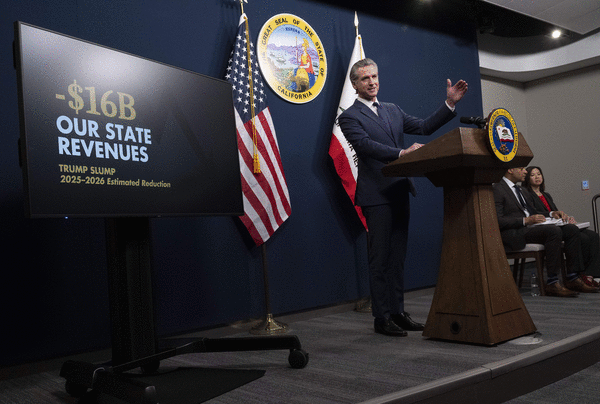
The Newsom administration said Friday that it does not plan to use state employee compensation costs as a means to shore up the state’s budget as it did last year when California faced a larger-than-expected deficit.
When asked what actions California might take in the event positive revenue projections don’t hold in the coming months, Finance Director Joe Stephenshaw said: “It would be premature to say what we will ultimately do, so we have to wait and see.”
During Friday’s budget proposal, the Newsom administration presented a financial plan for the upcoming fiscal year that included no new major investments and projected a modest $2.9 billion deficit.
With California facing an unexpectedly large budget problem last May, the Newsom administration negotiated new agreements with all 21 of the state’s bargaining units to reduce the state’s payroll costs. California leaders and the unions ultimately landed on instituting personal leave programs and suspending retirement contributions, measures that reduced the state’s expenses at the time but created future financial liabilities.
It’s not yet known what California’s economic position will look like later in the year, but the Newsom administration projected confidence on Friday.
The Finance director noted that the stock market remains strong in the final months of the year and that revenues from the state’s personal-income and corporation taxes exceeded expectations by billions of dollars.
Friday’s budget proposals contained $261 million for increases to employee compensation and health care costs, which included negotiated raises, for the upcoming fiscal year. This year SEIU Local 1000 will negotiate new contracts for the nine bargaining units that represent various classes of state workers.
President Anica Walls said Friday’s proposal was better than expected, but it is still early in the budget process.
“As we move into bargaining, our message is simple: We need to prioritize the state workers who do the work and continue to provide the services to California,” Walls said. “That means livable wages, affordable health care and job security.”
She also said the state should be preserving the flexibility that telework provides as a means to retain experienced workers. That attractive benefit is under threat with Gov. Gavin Newsom’s return-to-office directive, which is scheduled to go into effect in July 2026.
The California State Auditor released a report on the state’s telework policies last fall, which found that the state could save over $200 million on government office space costs if the administration maintained its current telework policies.
A review of the Newsom administration’s budget proposal found that no additional funding was allocated to help departments accommodate the return of state workers to offices four days a week this summer. The Governor’s Office did not respond to questions as of publication time.
The budget document noted that between 2019 and the current fiscal year, California appropriated $45 million toward improving the state’s recruitment systems, professional development offerings and data privacy protections. The Newsom administration also touted its efforts to streamline the number of state job classifications in use as a means to speed up the state’s notoriously slow hiring process.
Additionally, the budget document reported that the Newsom administration expects to save hundreds of millions of dollars from eliminating over 6,000 vacant positions. The budget proposal touted over $3 billion in savings from reductions to state operations expenditures in the current and next fiscal years.
Additionally, California plans to contribute $9.8 billion and $4.8 billion to retirement systems for state employees and public school teachers respectively in the coming fiscal year.
_____
©2026 The Sacramento Bee. Visit sacbee.com. Distributed by Tribune Content Agency, LLC.






Comments