The Live Nation empire that music fans hate is at risk of a breakup
Published in Business News
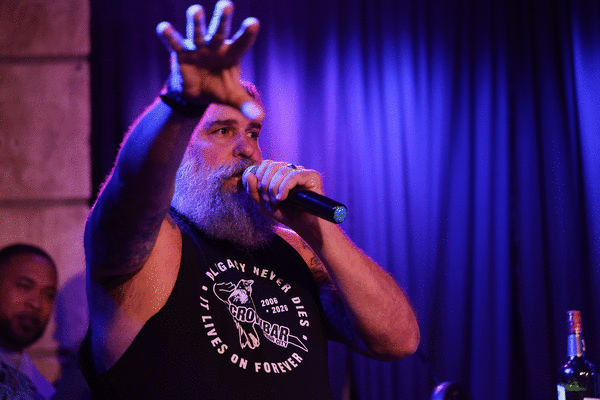
The Crowbar nightclub of Tampa, Florida, never looked like much outside: a squat building with painted-over windows in a neighborhood where feral chickens roam brick streets.
Inside was where the magic happened. For 20 years, Crowbar’s single, 300-person room served as a place to hear unknown artists before they broke or popular acts offering more intimate shows. Musicians as different as rock band OK Go, country’s Kenny Chesney and indie-pop singer Chappell Roan graced its stage. A generation of local rappers honed their skills there.
On July 31, Crowbar closed its doors for the last time, beset by rising costs and the elephant in any discussion about concerts in the U.S.: Live Nation Entertainment Inc. The colossus — which owns and operates arenas and clubs in multiple countries, runs America’s biggest ticketing service and manages musicians’ careers — plans to open its own venue nearby. For Crowbar’s final show, rapper Talib Kweli flew down from New York City, with local hip hop artists joining him onstage.
Across the country, some 480 independent venues and 240 music festivals have shut since 2020, with 160 shuttering so far this year, according to the National Independent Venue Association, a trade group for the industry. While the COVID-19 pandemic and surging inflation each played a role, so has the market power of Live Nation, according to Crowbar owner Tom DeGeorge and other independents. They struggle to compete against a $40 billion company that can steer artists to play one venue and avoid others while exerting significant control over ticket pricing through its Ticketmaster subsidiary.
This year, the Trump administration agreed to settle a monopoly case against Live Nation weeks after the company’s CEO met with the president. The company denies any political interference. Displeased with the deal, a group of states fought on and, in April, won a landmark jury verdict that the company illegally monopolized live events. Now, those states want a federal judge to take the rare step of ordering a corporate breakup. Independent club owners and many musicians argue it’s the only way to bring balance back to the market.
“If Live Nation wasn’t the monopoly they were, I think all of our independent venues would have the ability to thrive much more,” DeGeorge said in an interview. “When you have one entity that comes in that controls the entire ocean, nobody else gets to swim.”
U.S. District Judge Arun Subramanian in New York, who is overseeing the case and will ultimately decide on a breakup, missed a self-imposed deadline in late July to rule on Live Nation’s bid to throw out the jury’s verdict. Three months later, he still hasn’t decided or scheduled next steps in the case.
Live Nation, which plans to appeal the jury’s verdict, said in a written statement to Bloomberg that the live entertainment industry is both fragmented and competitive. Its operations across different parts of the industry allow it to invest in the music ecosystem at large while supporting artists, the company said.
“Small venues often operate on slim margins, and when faced with the broader economic pressures we are witnessing today, some fail,” the company said. “But there is also significant new investment in small venues. Live Nation is not dominant. A large majority of shows we promote take place in venues we don’t own — over 5,000 shows last year.”
Ticketmaster is likely the best-known part of Live Nation, handling tickets for an estimated 86% of the U.S. concert market and serving as the largest ticketing operator in the world. But the parent company and its many subsidiaries also dominate areas of live music largely invisible to fans.
Based in Beverly Hills, California, Live Nation has operations in 55 countries across Europe, Asia, Australia and Latin America. While North America is its largest market, the company has focused on global efforts in recent years, which now account for 43% of its revenue. Last year, Live Nation hosted nearly 20,000 concerts outside the U.S. and Canada and added its first venue in South America — the Vive Claro stadium in Bogota, Colombia — to the more than 127 international stages and 130 music festivals it operates.
In just the U.S., it owns or operates hundreds of venues, including clubs, ballrooms, theaters and 42 of the top 50 amphitheaters. It has stakes in popular music festivals like Lollapalooza and Bonnaroo.And as the largest U.S. concert promoter, Live Nation helps artists decide where and when to play. It owns dozens of artist-management companies, including Vector Management — which represents Hank Williams Jr. and rock band Our Lady Peace, among others — as well as Jay-Z’s Roc Nation.
It also owns merchandise and streetwear brands, marketing firms and even the publisher of music publications Brooklyn Vegan, Alternative Press, Revolver and Goldmine. In August, that publisher, Veeps, fired much of the editorial staff at all four publications, surprising many who had no idea that Live Nation or Veeps — originally a livestreaming platform created by two members of the band Good Charlotte — owned them.
Although Live Nation lists Veeps among its subsidiaries in government filings, the company in a statement to Bloomberg described itself as an investor in the firm and said Live Nation does not operate or make editorial decisions for those publications.
Sometimes, even those in the industry say they don’t know when they are dealing with Live Nation. In July, British singer Ellie Goulding sued her former managers, accusing them of hiding their ties to the company while steering her to its venues for tours. Lawyers for her former managers denied the allegations and said that Goulding was aware of the connection to Live Nation. (Live Nation said it wasn’t a party to the Goulding suit and declined to comment.)
“They literally own every aspect” of live music, said Lynn Schwarz, co-owner of Bottom of the Hill, an independent club in San Francisco. “They’re doing the ticketing. They’re taking a cut of the merch. And their ticket prices are astronomical.” (The company says it adopted a policy in 2023 not to take a cut of artists’ merchandise sales at its clubs.)
She and her business partners are looking to sell the venue, which Rolling Stone magazine once called the city’s best place to hear bands. While the decision wasn’t directly prompted by Live Nation, she said, “We feel them out there waiting in the wings for us to fail.”
Live music has been in a state of flux since 2020 when the pandemic shut down thousands of clubs and concert halls for months. Their survival on the line, independents successfully lobbied Congress for help. More than 4,800 venues and promoters across the U.S. received $6.1 billion in grants, according to the federal Small Business Administration. Corporate-owned venues weren’t eligible for the program.
Live Nation recovered quickly. Its revenue last year topped $25 billion, compared to $11.5 billion in 2019. Adjusted operating incomes, the company’s preferred metric for profits, reached $2.4 billion last year.
Independent venues, in contrast, have struggled to bounce back. A survey conducted by NIVA found 64% of them weren’t profitable in 2024. Within that group, 22% reported struggling to stay open.
Franz Nicolay, keyboardist for rock band The Hold Steady, said independent clubs and concert halls are essential for “baby bands” — those just starting out. Independents “are the ones who give us our first shows. They’re the ones who work with us when we can draw 100 people,” he said. “You need that part of the infrastructure to have a healthy music ecosystem.”
Fewer independent spaces also make it harder for artists to negotiate favorable touring terms, said Joey La Neve DeFrancesco, guitarist and singer with the punk band Downtown Boys.
“There’s so many markets where it’s literally the only option to play a Live Nation venue,” DeFrancisco said. “You have less leverage as an artist, even with a booking agent, to get good deals if you’re just negotiating between Live Nation venues.”
The effects aren’t just on how much money an artist makes, said DeFrancesco, who helped found the United Musicians and Allied Workers, which represents about 19,000 people. Live Nation also often imposes restrictive “radius clauses,” he said, barring musicians from playing a nearby city after they’ve just performed at a festival. The company disputed that it dominates in any locations and said artists have many options on where they play, particularly in larger cities.
And yet, few big-name artists have been willing to criticize Live Nation in public. That may be because headliners, in some ways, benefit from its monopoly, Nicolay said. The company can offer higher guarantees — the money an artist is promised to take home from a tour — than its competitors. And its control of both venues and concert promotion simplifies the process of booking a tour, he said.
“They can buy out your entire tour and handle it completely,” said Nicolay, who in May testified about Live Nation’s practices before Congress on behalf of the nonprofit Future of Music Coalition. “There’s some appeal to that.”
Growing concern about the company’s market power led the U.S. Department of Justice and more than 30 states to sue Live Nation in 2024 for monopolization. The suit unearthed internal chats from one of the company’s ticketing directors bragging about raising prices on fans for parking and other amenities at a Tampa amphitheater Live Nation manages.
“Robbing them blind baby,” the ticketing director said, “that’s how we do.” Live Nation said the comments were made by a lower-level employee who is no longer with the company and “do not reflect our company culture, how we operate or speak about fans.”
The Justice Department, however, agreed to settle with Live Nation one week into the trial. The move came after Chief Executive Officer Michael Rapino met with President Donald Trump, although the company said deal terms weren’t discussed. The music giant also hired several people close to the president for help in settling the case. They included Kellyanne Conway, Trump’s 2016 campaign manager; longtime adviser Richard Grenell, who now sits on Live Nation’s board; and a lawyer who has represented Trump in court.
Live Nation said the proposed settlement, which still requires court approval, should be judged on its merits. “We did not seek President Trump’s intervention in the settlement negotiations, and any suggestion that the settlement was the result of political interference is inaccurate,” the company said.
Under the agreement, Live Nation would stop forcing venues to use it exclusively for ticketing. The company also would develop technology to allow rivals to integrate with Ticketmaster, letting multiple ticketing services book a single event.
Many of the states and venue owners involved in the suit considered the deal’s terms insufficient, and they pressed ahead. In April, a New York federal jury found the company maintains several illegal monopolies, including refusing to let other promoters rent Live Nation amphitheaters. The jury also concluded Live Nation overcharged fans for tickets. The company denies the allegations and plans to appeal.
The states say that nothing short of a splitting Live Nation and Ticketmaster will remedy the problem. They also want to force Live Nation to sell some of its venues and place limits on future acquisitions. NIVA, which wasn’t part of the suit but submitted comments on the proposed settlement, wants the company to divest its artist-management arm.
“As long as one company controls both the shows, tickets, and artist management, they can always tilt the playing field in their own favor,” said David Weingarden, vice president for concerts and events at Colorado’s Z2 Entertainment. He too wasn’t involved in the lawsuit but submitted comments on the agreement.
Live Nation disputed that it steers business to venues that use Ticketmaster and said comments from rivals seek to advance their own commercial interests or misrepresent the settlement’s terms.
Judge Subramanian is expected to decide on Live Nation’s fate in the coming months, ruling on both the proposed settlement and the states’ breakup request.
While Live Nation doesn’t own any music venues in Tampa today, the company influences all of them in one way or another.
The city’s largest spaces, for example, all use Ticketmaster for concert tickets. They include Raymond James Stadium, home to the National Football League’s Buccaneers; Benchmark International Arena, where the Tampa Bay Lightning hockey team play; and the Yuengling Center at the University of Southern Florida. Now, however, Live Nation plans to open a 4,300-person music venue just a few blocks from Crowbar, in the Ybor City neighborhood the nightclub long called home.
Once known as the cigar capital of the world, Ybor City was founded in 1886 as a Tampa suburb and quickly became home to Cuban, Spanish and Italian immigrants who worked in the cigar factories. After the U.S. embargo on Cuban imports killed the industry, the neighborhood gradually transformed into a haven for artists drawn by cheap rent. But links to its past remain, including free-roaming chickens descended from the backyard hens raised by factory workers.
DeGeorge arrived in Ybor City by way of Atlanta, serving as the general manager of a historic movie theater turned music hall for several years. He founded Crowbar in 2006, becoming a neighborhood fixture in the process. With his uniform of jeans, Crowbar tank showing off heavily tattooed arms and a full gray beard, he’s hard to miss. Even a short walk around Ybor takes time as locals stop him to say hello or offer a hug.
As DeGeorge tells it, he realized during the pandemic that Crowbar wasn’t going to survive long-term. Taking out a loan, DeGeorge made a deal with the building’s landlord for a lease extension to 2026. That would get him to the club’s 20th anniversary and allow him to go out on his own terms. The building owner later offered a further lease extension, but DeGeorge made up his mind to end on a high note, scheduling shows for nearly every night in the lead-up to closure.
While Live Nation’s proposal is for a larger venue, DeGeorge said the layout would allow it to close portions and host shows that compete directly with smaller venues. And because of its multiple business lines, the company can take a loss on an individual show while making up the money elsewhere, something small club owners can’t do. He hopes community members can convince the city to block Live Nation’s project.
If “small rooms keep closing, the entire industry is going to crumble,” DeGeorge said. “We are the rose that grows out of the concrete. We are that support network for these smaller artists that end up playing those big rooms.”
Live Nation says Tampa needs more mid-sized concert spaces, and its project will benefit the local music community, not harm it.
“Tampa remains underserved for live music compared with cities of similar size, and one of its needs is high-quality mid-sized venues,” the company said. “These projects are unambiguously good for the Tampa music scene.”
©2026 Bloomberg L.P. Visit bloomberg.com. Distributed by Tribune Content Agency, LLC.








Comments