Mortgage rate forecast: October 2026
Published in Business News
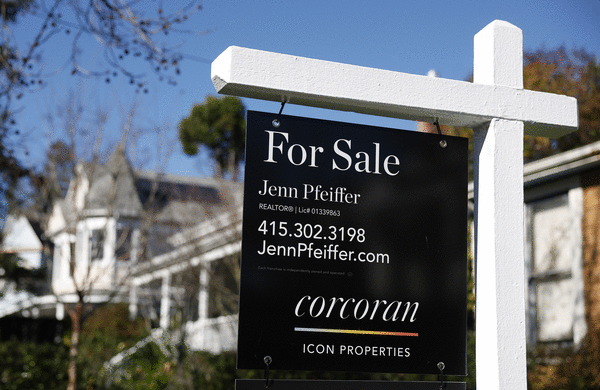
Mortgage rates surged in September, and they’ve reached their highest point since May 2024. The run-up in rates has left many consumers feeling less than eager to dive into the housing market.
The war in Iran sent oil prices soaring in recent months. Higher energy prices translate to both higher inflation and rising 10-year Treasury yields. And both of those things exert upward pressure on mortgage rates.
At the end of September, the average 30-year mortgage rate was 7.38%, according to Bankrate’s weekly lender survey.
“With inflation still running well above target and no sustained relief from lower oil prices, the path of least resistance for rates remains higher,” says Nicole Rueth, senior vice president at CrossCountry Mortgage.
Will mortgage interest rates go down?
Most housing economists say mortgage rates are likely to stay elevated. The Mortgage Bankers Association and Fannie Mae both call for rates to stay near 7% for the rest of 2026 — although their latest forecasts were issued before the late September jump in mortgage rates and Treasury yields.
Mortgage rates are nothing if not volatile, though, and other factors are pushing them higher — especially the war in Iran.
Current mortgage rate trends
The median national home price clocked in at $429,100 in August, up 1.6% from a year earlier, according to the National Association of Realtors. But home sales volumes remain muted by the recent spike in mortgage rates.
“For the housing market, this increase in mortgage rates acts as a significant headwind,” says Lisa Sturtevant, chief economist at Bright MLS. “Sellers are having to adjust their pricing expectations and offer more concessions to buyers.”
Bankrate’s weekly mortgage rate averages differ slightly from the statistics reported by Freddie Mac, the government-sponsored enterprise that buys mortgages and packages them as securities. Bankrate’s rates tend to be higher because they include origination points and other costs, while Freddie Mac removes those figures and reports them separately. However, both Bankrate and Freddie Mac report similar overall trends in mortgage rates.
What to do if you’re getting a mortgage this year
—Shop around. With rates elevated, it’s more important than ever to shop around for a mortgage. Bankrate’s Hidden Homeownership Tax research found that 87% of Americans overpaid for their home loans in 2025 because they settled for the first offer they got. For the typical borrower, that added up to $3,343 in extra costs each year. The stakes are only higher when mortgage rates are rising quickly.
—Improve your credit score. The lowest mortgage rates go to borrowers with the highest credit scores, usually at least 780. A lower credit score won’t prevent you from getting a loan, but it can make all the difference between getting the best possible rate and more costly borrowing terms.
—Save up for a bigger down payment. Putting more money down upfront can help you obtain a lower mortgage rate, and if you put down at least 20% of the purchase price, you’ll avoid mortgage insurance, which adds costs to your loan. If you’re a first-time homebuyer and can’t cover a 20% down payment, there are loans, grants and programs that can help. Eligibility requirements vary by program but often depend on factors like your income.
—Understand your debt-to-income ratio. Your DTI ratio compares how much money you owe to how much money you make, specifically your total monthly debt payments against your gross monthly income.
Frequently asked questions
— How are mortgage rates determined?
Mortgage rates aren’t set by any one entity; they come from a complex mix of economic factors. Lenders typically set their rates based on the return they need to make a profit after accounting for risks and costs. The Federal Reserve gets a lot of attention, but it doesn’t directly set mortgage rates, either.The closest proxy for mortgage rates is the 10-year Treasury yield: Historically, the typical 30-year mortgage rate has been about 2 percentage points higher than the 10-year Treasury yield. But since the pandemic, that spread has been closer to 3 percentage points.
— When should I refinance my mortgage?
Deciding when to refinance is based on many factors. If rates have fallen since you took out your mortgage, refinancing might make sense. A refi can also be a good idea if you’ve improved your credit score and could lock in a lower rate.
©2026 Bankrate.com. Distributed by Tribune Content Agency, LLC.









Comments